

You must have an order with a minimum of $1,000.00 to place your order, your current order total is $0.00.
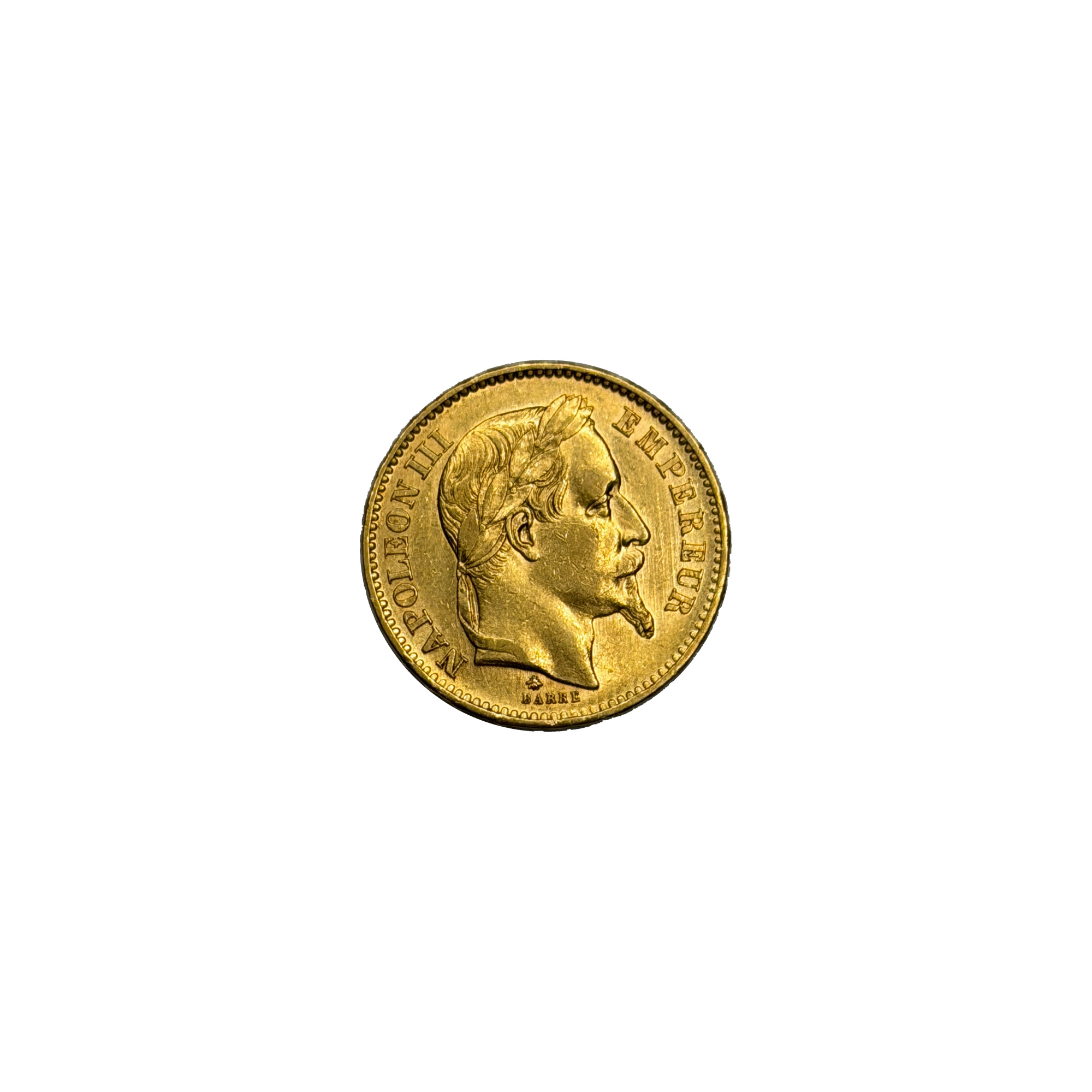
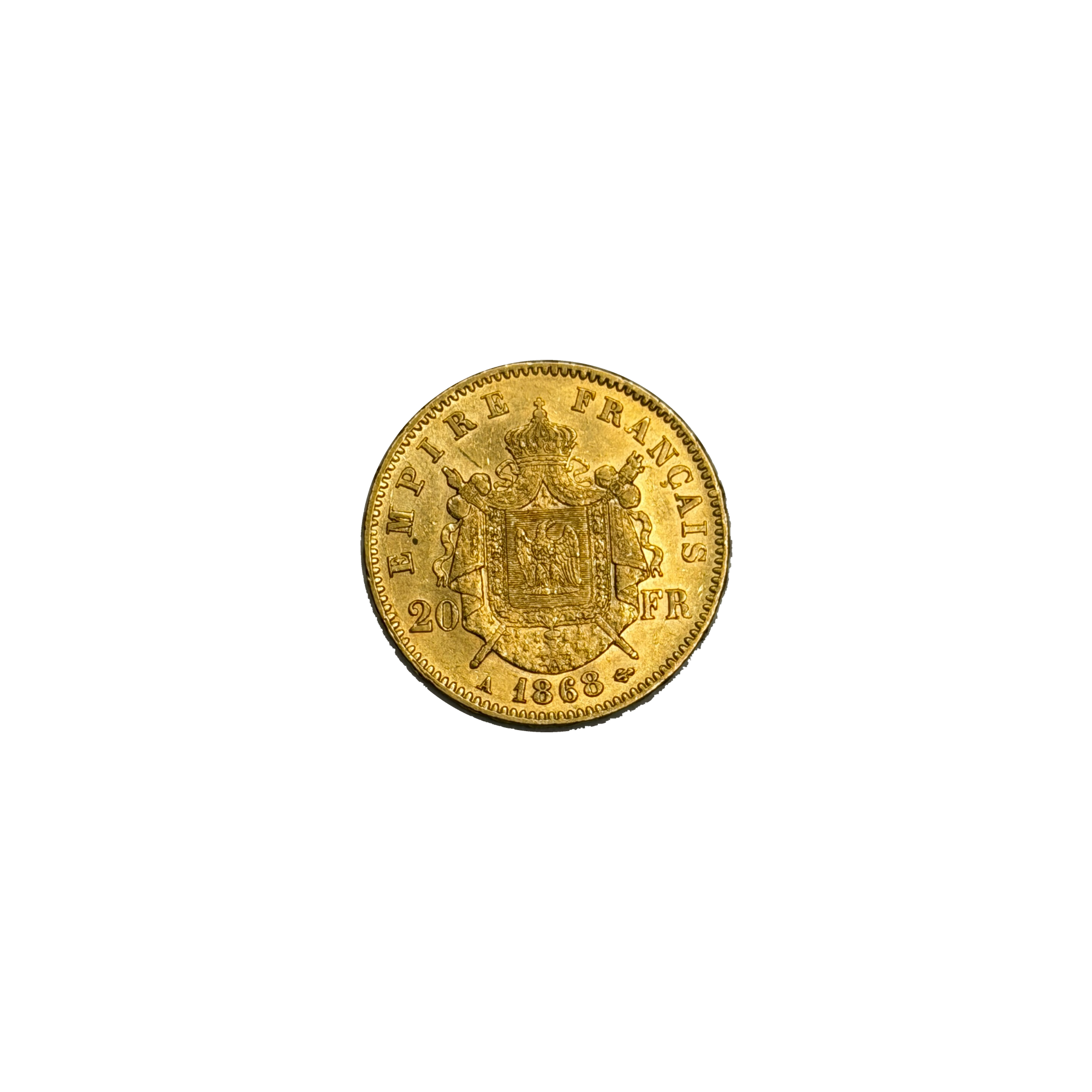
When dealers and investors speak of “Napoleons” — the universal shorthand for French 20 franc gold — the coin they usually mean is this one. Napoleon III, nephew of Napoleon Bonaparte, presided over the striking of nearly 233 million 20 franc pieces between 1853 and 1870, more than three times the combined output of every French 20 franc type that came before him. A single year of his production — the 26 million pieces of 1859 — exceeded everything his uncle’s mints accomplished in fourteen. If the Napoleon Bonaparte issues are the family’s founding document, the Napoleon III issues are the family at work: the everyday gold of continental Europe for a generation.
That production history is precisely what makes the coin attractive to investors today. Classified instructively as “historical bullion,” the Napoleon III 20 franc trades at per ounce acquisition costs comparable to modern bullion coins and tracks directly with the spot price of gold over time, while carrying the historic (pre-1933) designation and the associated insulation against the possibility of future government intervention. Because it remains the most readily available member of the French 20 franc family, it is typically the most accessible route into pre-1933 French gold. At roughly one-fifth of a troy ounce, it also offers divisible negotiability: affording its owner the flexibility to liquidate positions incrementally, in amounts proportionate to the specific needs of the moment and across a variety of circumstances. For investors whose priorities are recognizability, liquidity, ready availability, and divisible negotiability—all for near-bullion pricing—the Napoleon III 20 franc is the workhorse of the French series and among the lowest cost per ounce instruments in the historic gold market today.
The type divides into two distinct designs, both signed BARRE for the Barre family of chief engravers at the Paris Mint. The bare-head issues of 1853–1860 pair a plain portrait of the Emperor with the denomination within a wreath. The laureate-head issues of 1861–1870 crown the portrait with the victor’s laurel — the mustachioed profile facing right, inscribed NAPOLEON III EMPEREUR — and replace the wreath reverse with the full imperial coat of arms: a crowned mantle draped around a central shield bearing the imperial eagle, flanked by 20 FR and inscribed EMPIRE FRANÇAIS. The heraldry consciously echoes the First Empire, which was the point: the nephew ruled in the image of the uncle. USAGOLD does not specify portrait type on this offering — delivered coins may bear either design.
At 21mm in diameter and 6.45 grams total weight, each coin is struck from .900 fine gold and contains 0.1867 troy ounces of actual gold content — the germinal franc standard established under Napoleon I in 1803 and later adopted by the Latin Monetary Union. Grade range: AU/UNC. Minted 1853–1870 at Paris and branch mints.
Louis-Napoleon Bonaparte spent his early life in exile and prison plotting a return to the family business. The Revolution of 1848 gave him his opening: that December he became the first French president ever elected by universal male suffrage. When the constitution barred his re-election, he seized power in the coup of December 2, 1851, and one year later — December 2, 1852, forty-eight years to the day after his uncle’s coronation — proclaimed himself Emperor of the French.
The Second Empire he built was the France of Haussmann’s boulevards, railway expansion, modern banking, and industrial growth — an economy that ran on gold, and specifically on this coin. His reign ended abruptly with defeat in the Franco-Prussian War of 1870, when the Emperor was captured at Sedan and deposed. The 20 francs bearing his portrait document the entire arc, from the confident early Empire to its final year.
The defining monetary event of Napoleon III’s reign came in 1865, when France, Belgium, Italy, and Switzerland formed the Latin Monetary Union around the French standard — 6.45 grams, .900 fine, 0.1867 ounces of gold to the 20 franc piece. The agreement made gold coins of member states interchangeable across borders, and the Napoleon III 20 franc, produced in greater numbers than any other coin of the system’s founding era, became its working instrument. That is why the Swiss 20 Franc Helvetia, the Italian 20 Lira, and their counterparts remain gram-for-gram interchangeable with the French issues today — and why the entire class trades within one deep, unified market.
The enormous surviving supply of Napoleon III 20 francs is an investor advantage, not a defect. These coins trade on their gold content first and their history second, which keeps acquisition costs anchored near the underlying metal and spreads tight. Availability in quantity means positions can be built — and unwound — efficiently, without the sourcing delays that accompany scarcer types. The premium a buyer pays over the spot gold price is not fixed; it fluctuates with supply-and-demand conditions, and demand for recognized fractional gold has historically strengthened during flight-to-safety episodes. The Napoleon III’s role in the family is the entry point: the lowest-cost, most liquid path to the same specifications, the same recognizability, and the same pre-1933 standing carried by its scarcer siblings.
“Napoleon” remains the benchmark name in European fractional gold, and the Napoleon III issues — the most heavily produced of all the Napoleons — are the coins that built that benchmark. Dealers across Europe and North America recognize the type on sight, its specifications are universally documented, and its trading history is deep enough that bid-ask spreads remain tight wherever gold trades. For investors who may one day need to convert a holding to cash quickly, few historic coins perform that function as reliably.
In 1933, FDR issued Executive Order 6102, requiring Americans to surrender their gold coin and bullion to the Treasury — but the order and the regulations that followed it exempted gold coins of recognized special value to collectors of rare and unusual coins. Subsequent clarifications by the Treasury identified pre-1933 gold coins — a classification that includes the Napoleon III 20 franc, struck between 1853 and 1870 — as falling within that collector classification as historical items.
Under current constitutional law, a government intervention in the gold market would be executed through the power of eminent domain — the government’s right to take private property for public use provided it pays the owner just compensation. Historic coins complicate the government’s ability to broadly establish “just compensation” or “fair value,” which was precisely the reasoning behind the original “recognized special value” exemption in 1933. That complexity, and the precedent surrounding pre-1933 gold coins, creates a notable impediment to the government’s ability to restrict them broadly — particularly compared to modern bullion, which can be valued easily and consistently at a single price. In essence, it is a bureaucratic question of whether the government would undertake the enormous task of valuing the diversity and complexity of the historic-coin genre — every coin, every date, every condition, every personal holding — and that difficulty is what insulates the owner’s legal liquidity rights in the event of capital controls.
Whether a future government intervention in private gold markets is a risk an investor assigns significant weight to is a personal judgment. The factual point is narrower: the pre-1933 status represents a layer of portfolio differentiation that this coin carries at minimal added per-ounce cost over comparable modern bullion, along with a measure of insulation for the legal liquidity rights of its owner.
For a more in-depth study, we invite you to read our comprehensive memorandum on this subject: Preparing for a Potential Gold Confiscation
The French 20 Franc Napoleon III is the definitive Napoleon — the coin that made French gold the common currency of nineteenth-century Europe and the name by which all French gold is still known. It combines the deepest availability in the historic fractional market with universal recognizability and the flexibility of divisible negotiability, all at per ounce acquisition costs comparable to modern bullion. No other historic gold coin delivers so many of the advantages investors actually use at so accessible a cost of entry.
| Year | Mintage |
|---|---|
| 1853 | 5,787,241 |
| 1854 | 23,470,950 |
| 1855 | 18,732,206 |
| 1856 | 18,349,239 |
| 1857 | 19,208,790 |
| 1858 | 19,039,626 |
| 1859 | 26,031,828 |
| 1860 | 15,937,265 |
| 1861 | 3,962,481 |
| 1862 | 7,763,467 |
| 1863 | 8,623,273 |
| 1864 | 10,525,729 |
| 1865 | 6,080,844 |
| 1866 | 13,777,672 |
| 1867 | 7,439,354 |
| 1868 | 14,091,843 |
| 1869 | 11,362,847 |
| 1870 | 2,717,440 |
| Total | 232,902,095 |
AU, UNC
1853-1870
.1867 troy ounce
France
| Quantity | Wire | Card |
|---|---|---|
| 1–26 | $891.22 | $928.35 |
| 27–53 | $882.31 | $919.07 |
| 54+ | $873.40 | $909.78 |
Quantity tiers reflect the historic & fractional gold order discount (1% at $25,000+ · 2% at $50,000+ in qualifying coins). Any mix of qualifying historic coins counts toward the same order total.
Prices shown under Wire include a 4% cash discount. Card prices are the full list price. ACH bank transfer is available to established clients only. First-time orders can be paid by wire transfer or card.
Interested in gold but struggling to find the right firm?

VF, XF
1814-1824
.1867 troy ounce
France
VF, XF
1830-1848
.1867 troy ounce
France
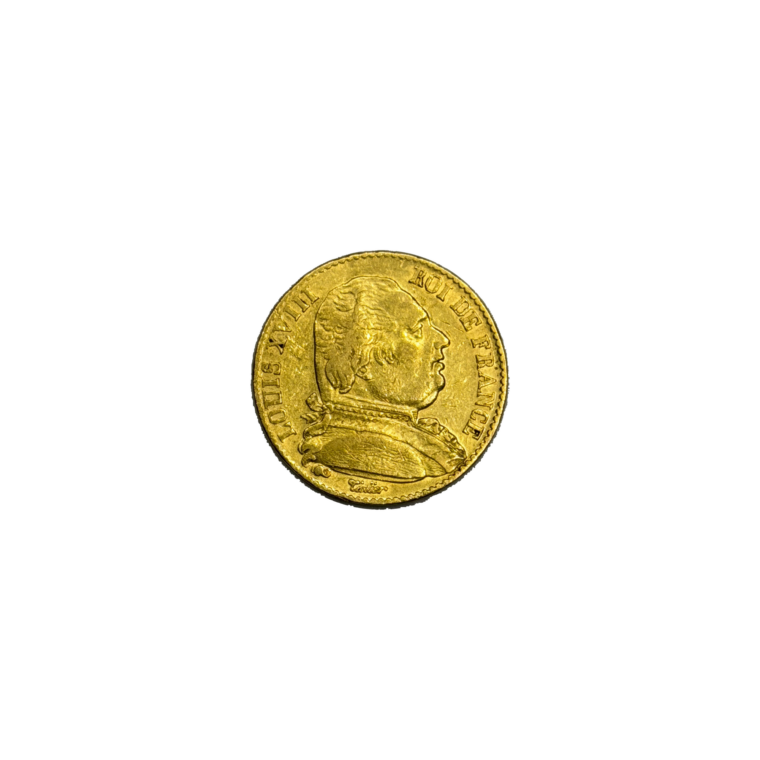
VF, XF
1814-1815
.1867 troy ounce
France
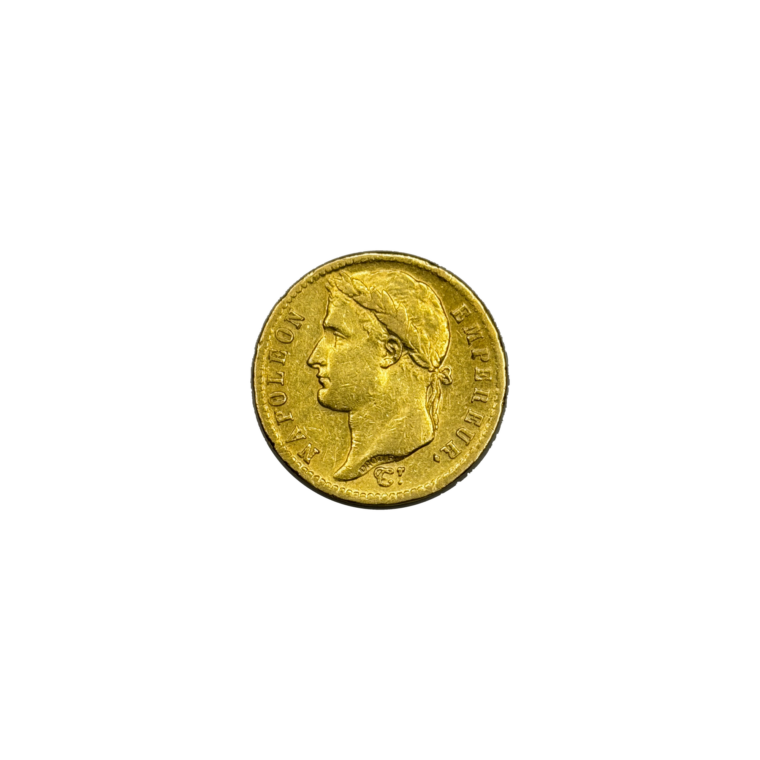
VF
1802-1815
.1867 troy ounce
France
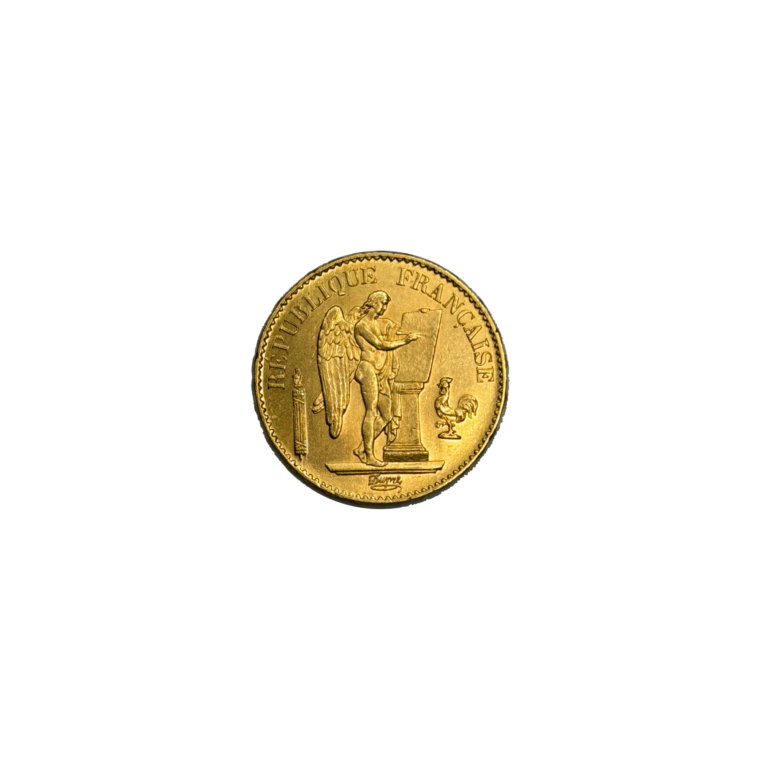
UNC, BU
1848/49, 1871 – 1898
.1867 troy ounce
France
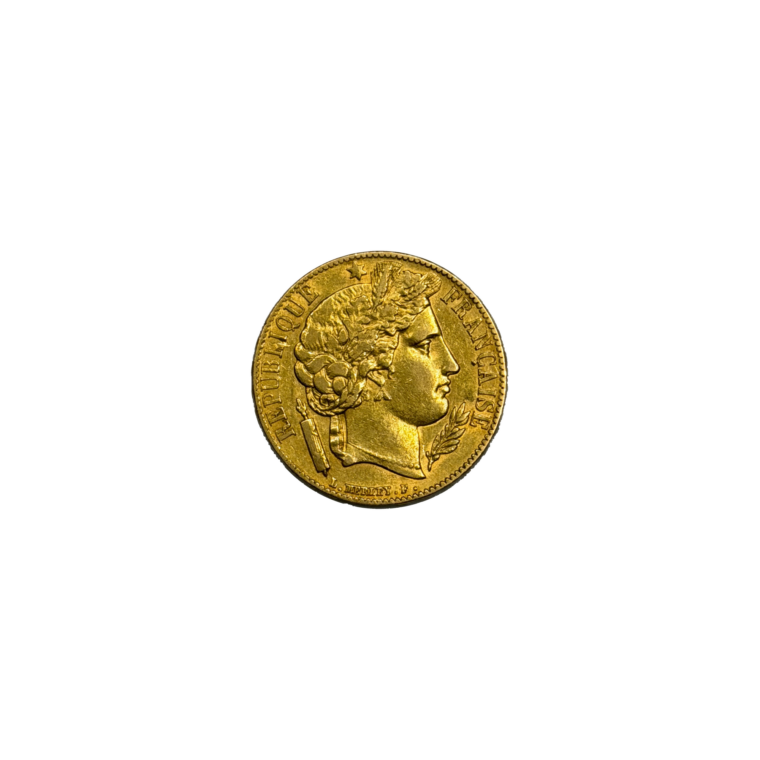
XF, AU
1849-1851
.1867 troy ounce
France
VF, XF
1825-1830
.1867 troy ounce
France


