

You must have an order with a minimum of $1,000.00 to place your order, your current order total is $0.00.
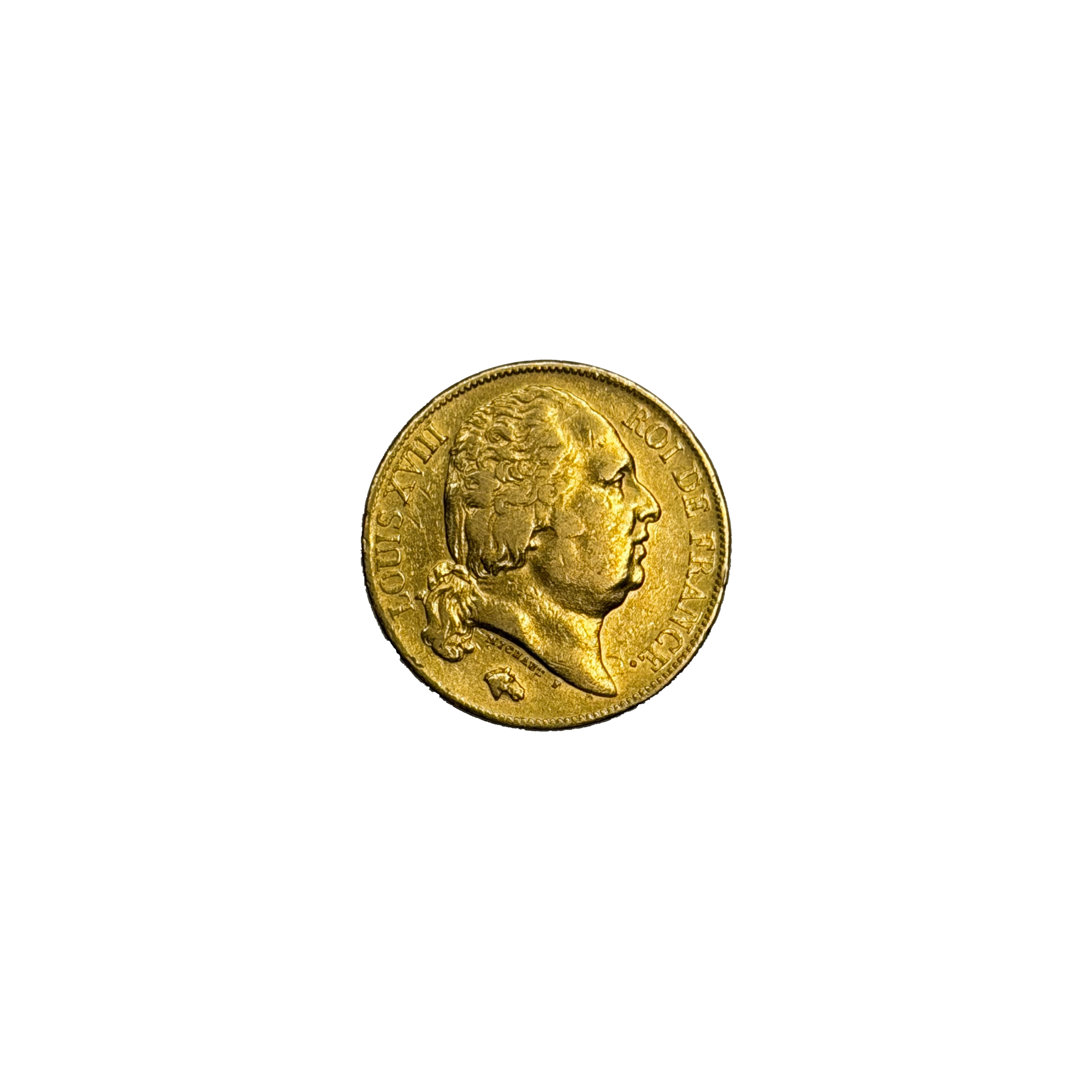
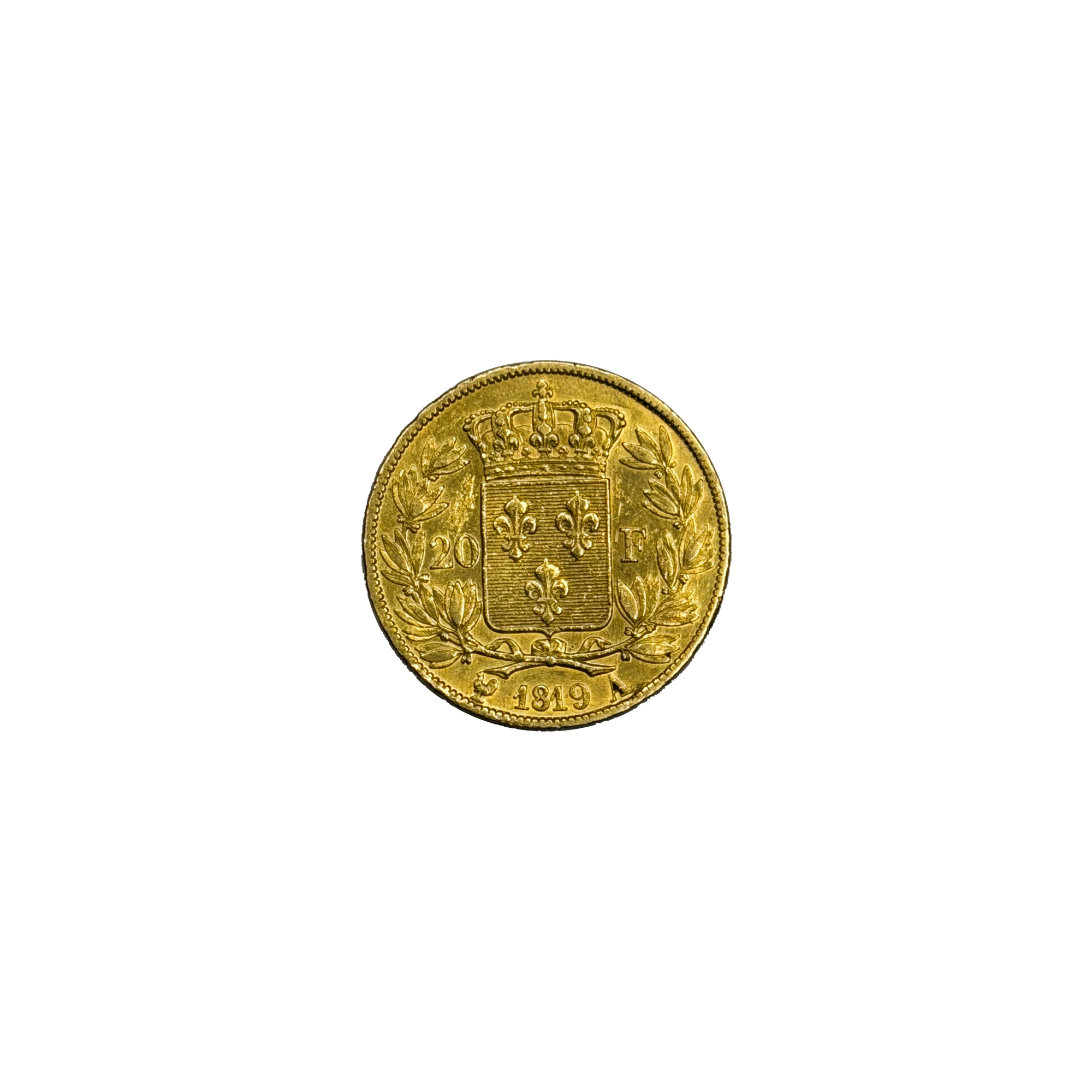
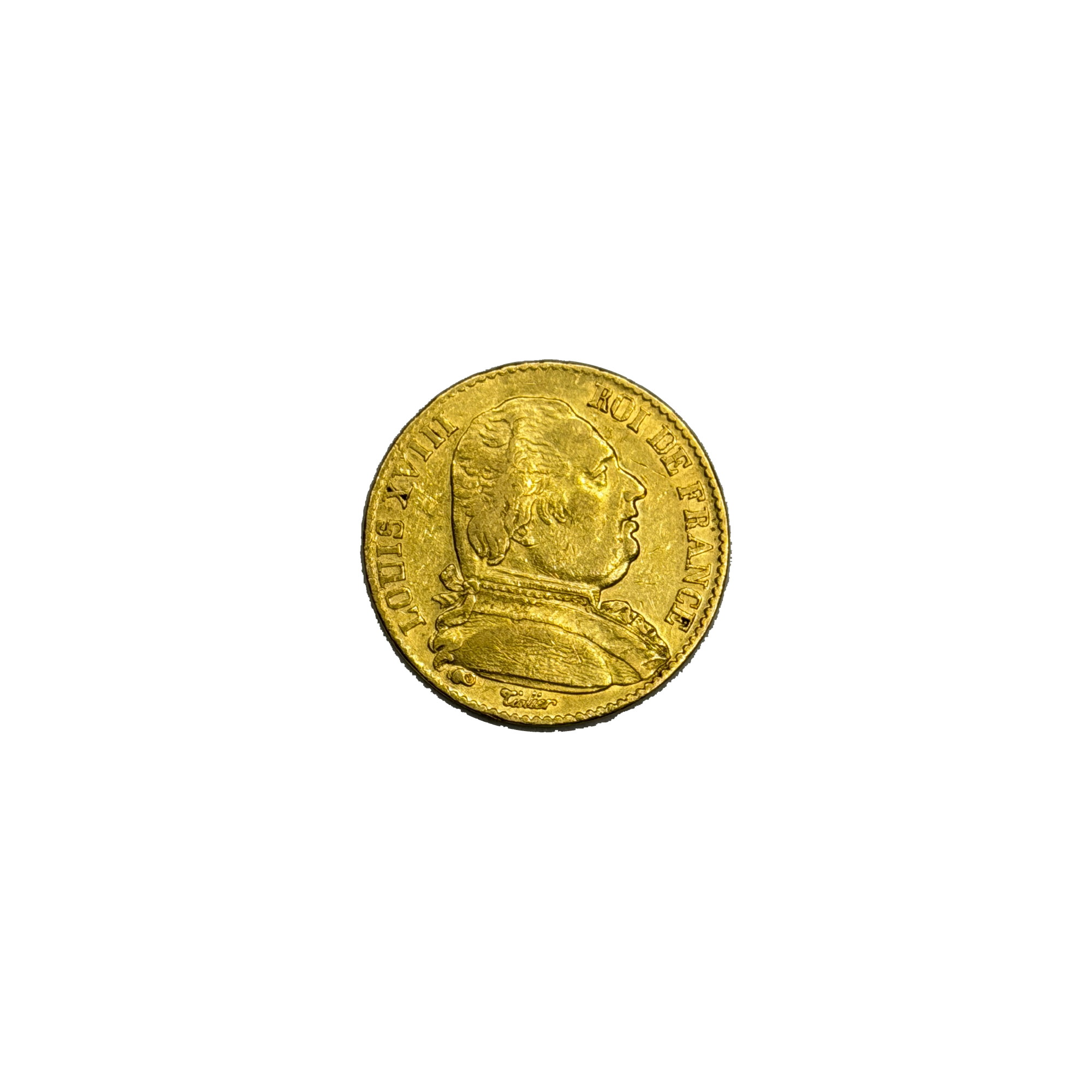
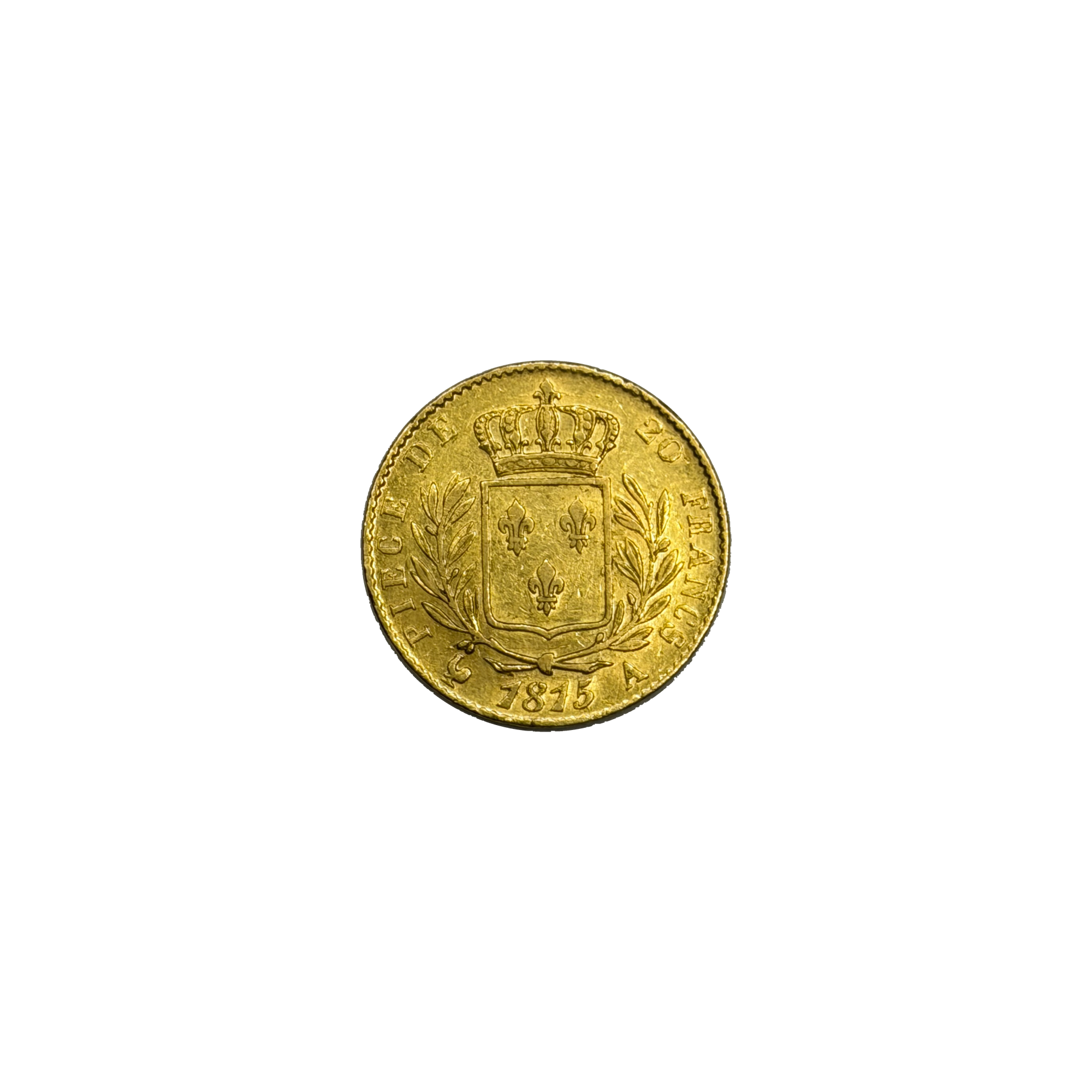
When Napoleon fell, the French 20 franc did not. Louis XVIII, the Bourbon king restored to the throne in 1814, kept the gold standard his rival had created — same weight, same fineness, same denomination — and struck more than 18 million 20 franc pieces between 1814 and 1824. These are the coins of the Europe that emerged from Waterloo and the Congress of Vienna: the second-oldest issues in the French 20 franc family, and the oldest that remain regularly available to investors at accessible cost.
The investor argument combines age with comparative scarcity. The entire eleven-year Louis XVIII series — 18,391,882 pieces — is smaller than what Napoleon III’s mints later produced in the single year of 1859, and two additional centuries of circulation, melts, and attrition have thinned the survivors well below what the original figure suggests. Yet the coin trades as “historical bullion,” at per ounce acquisition costs comparable to modern bullion, tracking the spot price of gold over time while carrying the historic (pre-1933) designation and the associated insulation against the possibility of future government intervention. At roughly one-fifth of a troy ounce, it also offers divisible negotiability: affording its owner the flexibility to liquidate positions incrementally, in amounts proportionate to the specific needs of the moment and across a variety of circumstances. For investors whose priorities are recognizability, liquidity, historical depth, and comparative scarcity against the later French series—all for near-bullion pricing—the Louis XVIII 20 franc reaches further back into European history than almost any coin at its cost of entry.
The series carries two portraits, and both tell the story of their moment. The issues of 1814–1815 present the king in uniform — a draped, epauletted bust facing right, signed by Tiolier of the Paris Mint, with the reverse inscribed PIECE DE 20 FRANCS around the crowned arms of France. The issues of 1816–1824, struck after the Hundred Days had ended at Waterloo, adopt a plain bare head signed MICHAUT, inscribed LOUIS XVIII ROI DE FRANCE, with the crowned fleur-de-lis shield of the Bourbons framed by branches on the reverse — the ancient heraldry of French royalty returned to French gold after a quarter-century of revolution and empire. USAGOLD does not specify portrait type on this offering — delivered coins may bear either design.
At 21mm in diameter and 6.45 grams total weight, each coin is struck from .900 fine gold and contains 0.1867 troy ounces of actual gold content — the germinal franc standard of 1803, retained without alteration by the Restoration. Grade range: VF/XF. Minted 1814–1824.
Louis XVIII waited longer for his throne than any French king. Brother of the executed Louis XVI, he spent twenty-three years in exile across Europe while the Revolution and Napoleon remade France, and returned in 1814 as a constitutional monarch under the Charter he granted that year. When Napoleon escaped Elba in March 1815, the king fled to Ghent; one hundred days later, after Waterloo, he returned for good. He proved a pragmatist in an age of zealots — retaining Napoleon’s civil code, his administrative structure, and, most durably, his money. He died on the throne in 1824, the only French monarch after the Revolution to do so.
For investors, the most instructive fact about the Louis XVIII 20 franc is what did not change. Dynasties turned over twice in 1814–1815 — Bourbon to Bonaparte and back again — and through all of it the 20 franc gold piece kept the exact specification Napoleon’s 1803 reform had established. Gold outlasted the governments that issued it, which is, in miniature, the entire argument for owning it. The Louis XVIII issues went on to circulate through the rebuilding of post-Napoleonic Europe, and their standard survived until the First World War, eventually anchoring the Latin Monetary Union coinage of France, Switzerland, Italy, and Belgium.
Scarcity in the French 20 franc family is always relative, and the Louis XVIII issues sit near the scarce end of it. Total production of 18.4 million compares with nearly 233 million Napoleon III pieces and 89 million Angels — and unlike those later series, the Louis XVIII coins have endured two full centuries of attrition. Several individual dates are genuinely small: 20,057 pieces in 1821, 19,973 in 1823. The coins were working money through the entire nineteenth century, and survivors in collectible condition represent a fraction of the recorded figures. The supply is fixed in the strictest sense — no demand event can enlarge a mintage that ended in 1824 — yet the coin trades in a market priced off the vastly more abundant later series, and little of that difference in supply is expressed in its cost of acquisition. The distance between what the investor holds and what the investor pays is the value.
The Louis XVIII 20 franc shares its specifications precisely with every other member of the French 20 franc family and with the broader Latin Monetary Union class — the most widely traded fractional gold coins in Europe for more than a century. Dealers across Europe and North America recognize the type on sight, and it trades within the same deep market as the common Napoleons while offering an age and comparative scarcity those issues cannot. Liquidity, in other words, comes at no sacrifice: the coin converts to cash as readily as its far more common siblings.
In 1933, FDR issued Executive Order 6102, requiring Americans to surrender their gold coin and bullion to the Treasury — but the order and the regulations that followed it exempted gold coins of recognized special value to collectors of rare and unusual coins. Subsequent clarifications by the Treasury identified pre-1933 gold coins — a classification that includes the Louis XVIII 20 franc, struck between 1814 and 1824 — as falling within that collector classification as historical items.
Under current constitutional law, a government intervention in the gold market would be executed through the power of eminent domain — the government’s right to take private property for public use provided it pays the owner just compensation. Historic coins complicate the government’s ability to broadly establish “just compensation” or “fair value,” which was precisely the reasoning behind the original “recognized special value” exemption in 1933. That complexity, and the precedent surrounding pre-1933 gold coins, creates a notable impediment to the government’s ability to restrict them broadly — particularly compared to modern bullion, which can be valued easily and consistently at a single price. In essence, it is a bureaucratic question of whether the government would undertake the enormous task of valuing the diversity and complexity of the historic-coin genre — every coin, every date, every condition, every personal holding — and that difficulty is what insulates the owner’s legal liquidity rights in the event of capital controls.
Whether a future government intervention in private gold markets is a risk an investor assigns significant weight to is a personal judgment. The factual point is narrower: the pre-1933 status represents a layer of portfolio differentiation that this coin carries at minimal added per-ounce cost over comparable modern bullion, along with a measure of insulation for the legal liquidity rights of its owner.
For a more in-depth study, we invite you to read our comprehensive memorandum on this subject: Preparing for a Potential Gold Confiscation
The French 20 Franc Louis XVIII is the coin of Europe’s great restoration — struck in the decade after Waterloo, bearing the returned heraldry of the Bourbons, on the gold standard that outlived the Emperor who created it. It offers two centuries of age, a production base a fraction of the later French series, and the liquidity of Europe’s most recognized coin family. No other gold coin carries an investor this deep into European history at a cost per ounce this close to the metal itself.
| Year | Mintage |
|---|---|
| 1814 | 2,876,948 |
| 1815 | 2,757,761 |
| 1816 | 207,750 |
| 1817 | 2,425,750 |
| 1818 | 4,039,533 |
| 1819 | 2,609,441 |
| 1820 | 1,426,780 |
| 1821 | 20,057 |
| 1822 | 233,661 |
| 1823 | 19,973 |
| 1824 | 1,774,228 |
| Total | 18,391,882 |
VF, XF
1814-1824
.1867 troy ounce
France
| Quantity | Wire | Card |
|---|---|---|
| 1–26 | $922.62 | $961.06 |
| 27–52 | $913.39 | $951.45 |
| 53+ | $904.17 | $941.84 |
Quantity tiers reflect the historic & fractional gold order discount (1% at $25,000+ · 2% at $50,000+ in qualifying coins). Any mix of qualifying historic coins counts toward the same order total.
Prices shown under Wire include a 4% cash discount. Card prices are the full list price. ACH bank transfer is available to established clients only. First-time orders can be paid by wire transfer or card.
Interested in gold but struggling to find the right firm?

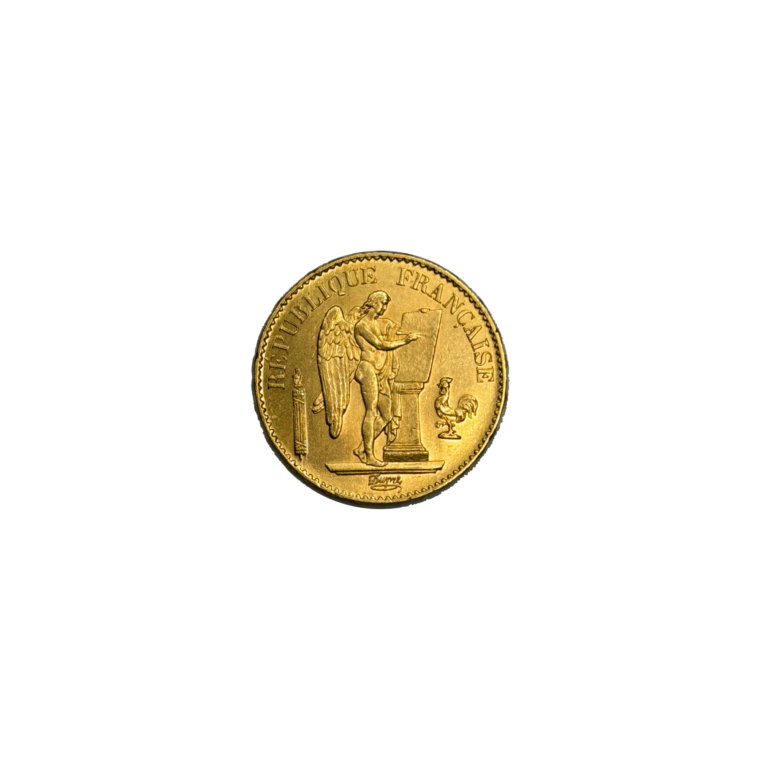
UNC, BU
1848/49, 1871 – 1898
.1867 troy ounce
France
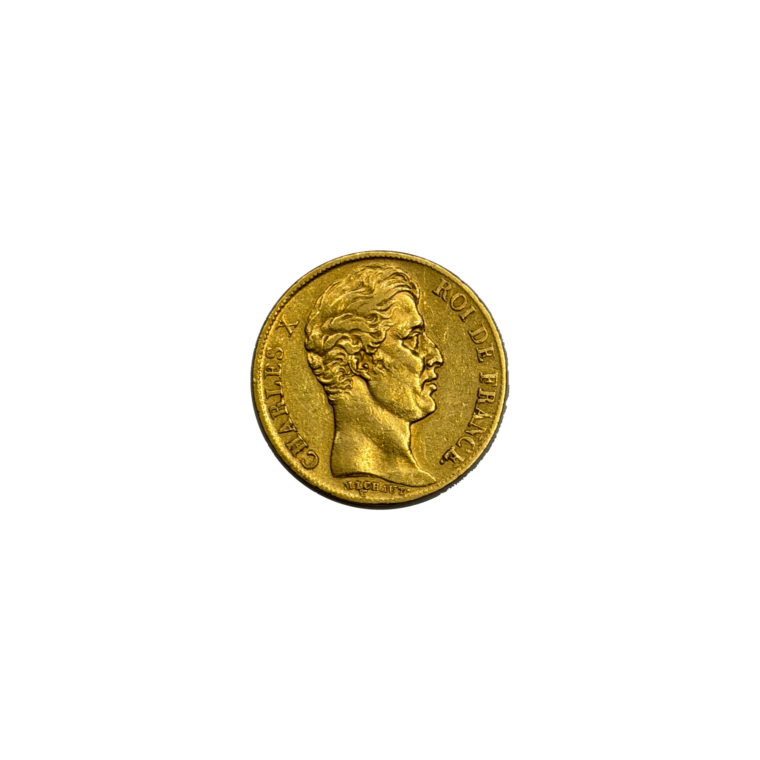
VF, XF
1825-1830
.1867 troy ounce
France
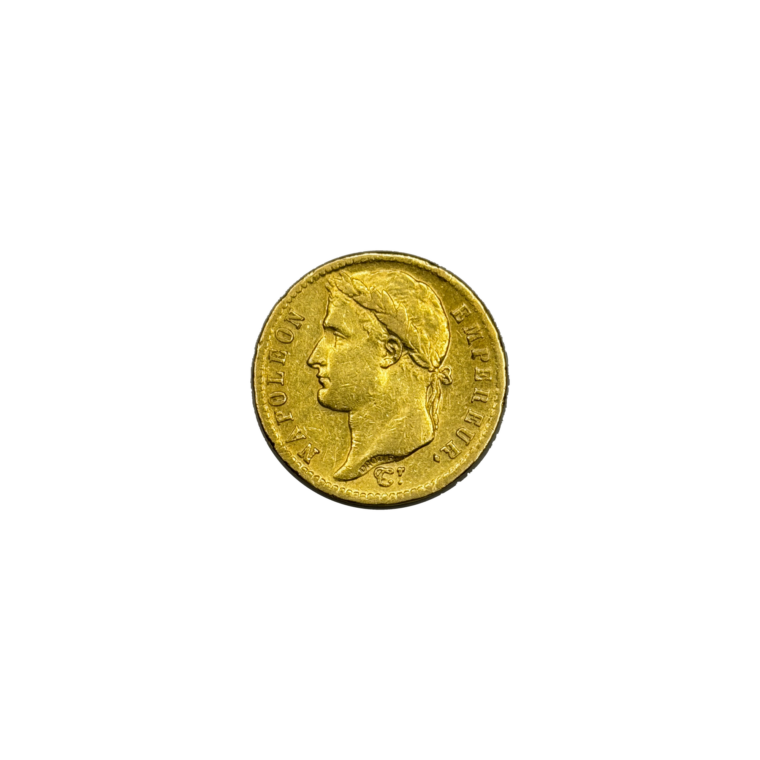
VF
1802-1815
.1867 troy ounce
France
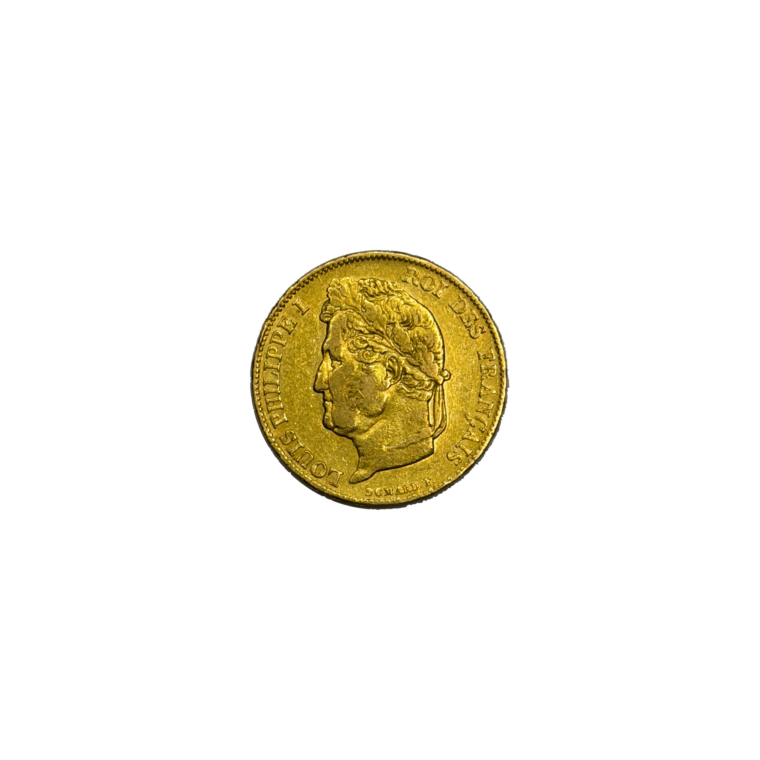
VF, XF
1830-1848
.1867 troy ounce
France
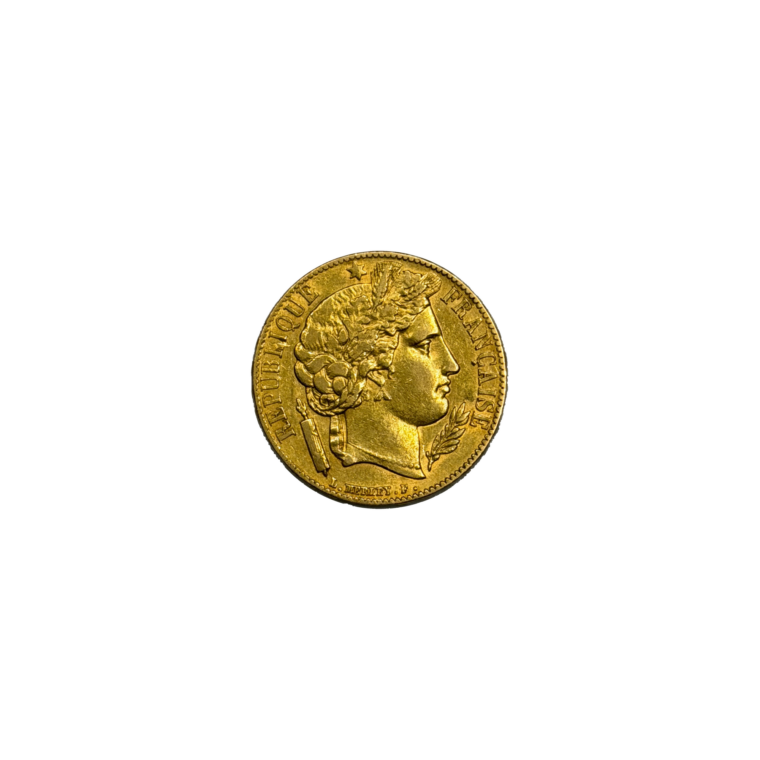
XF, AU
1849-1851
.1867 troy ounce
France
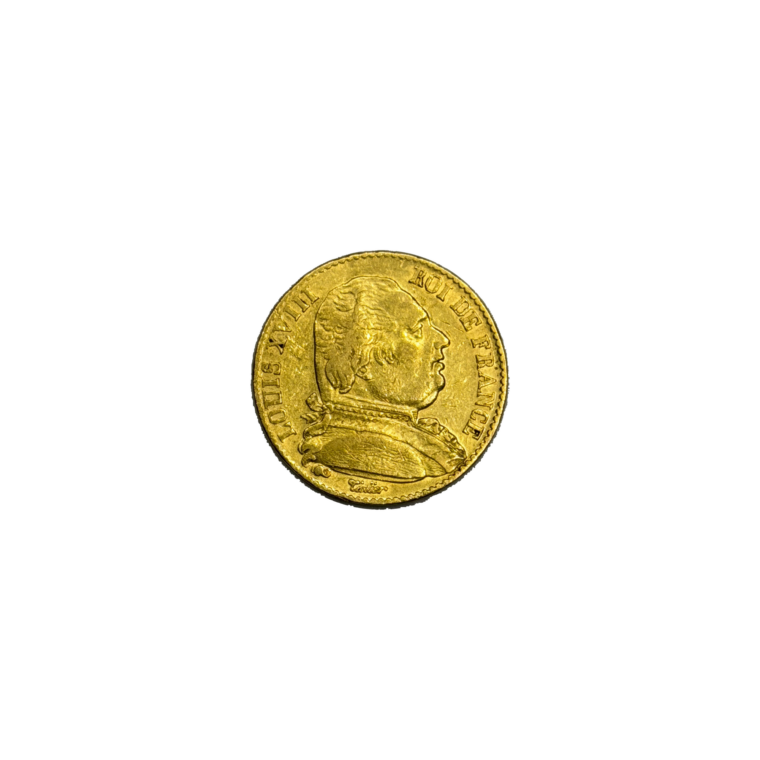
VF, XF
1814-1815
.1867 troy ounce
France
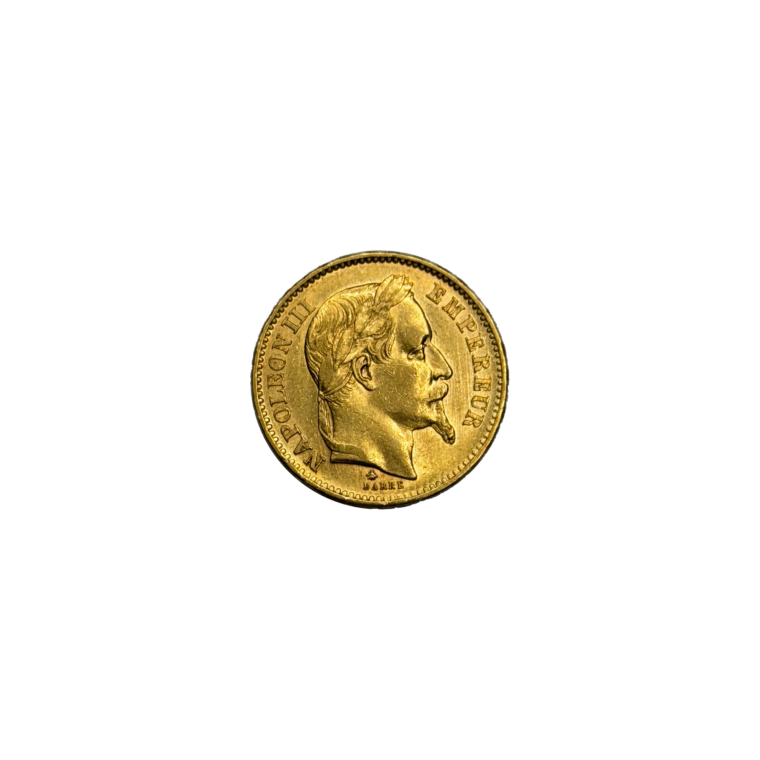
AU, UNC
1853-1870
.1867 troy ounce
France


