

You must have an order with a minimum of $1,000.00 to place your order, your current order total is $0.00.
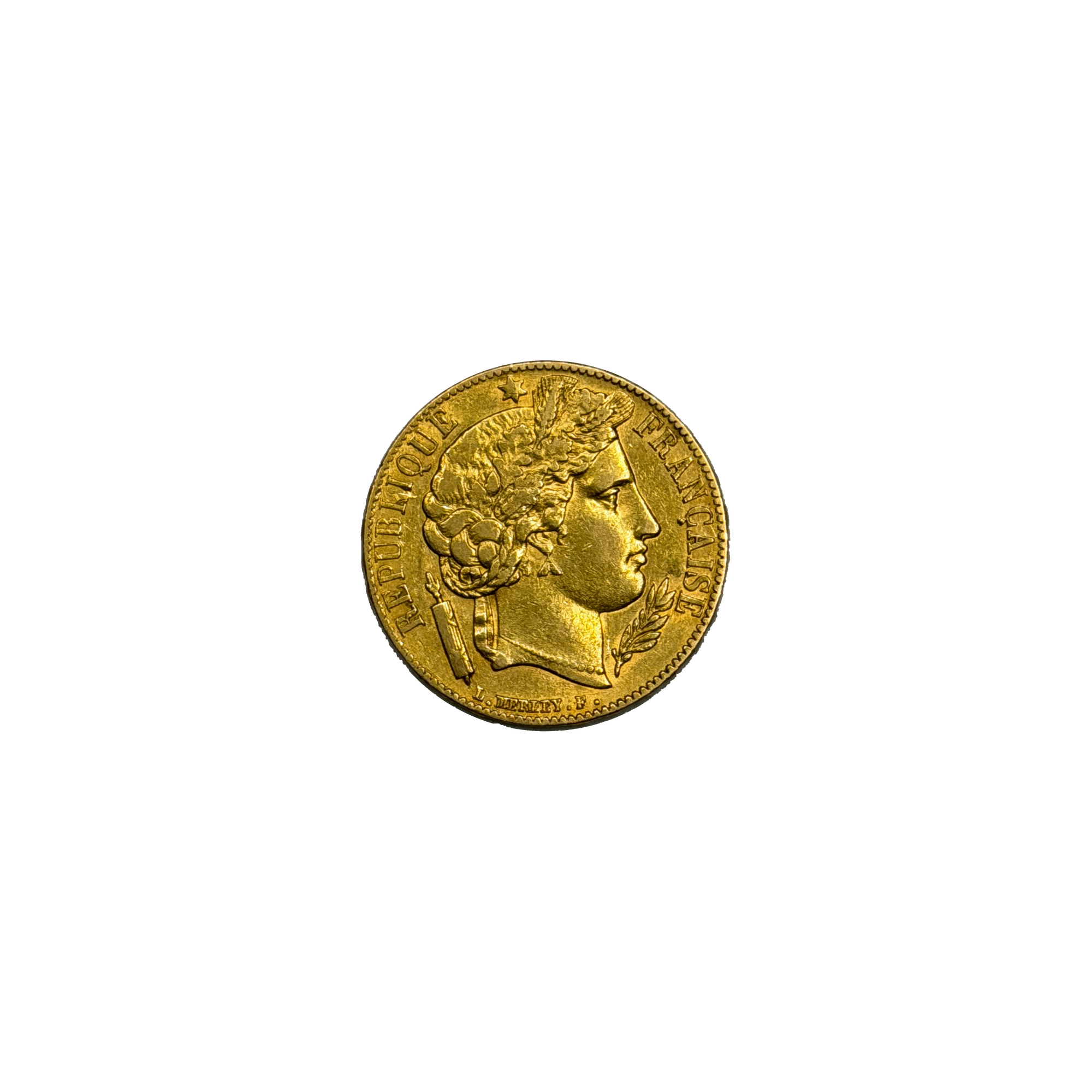
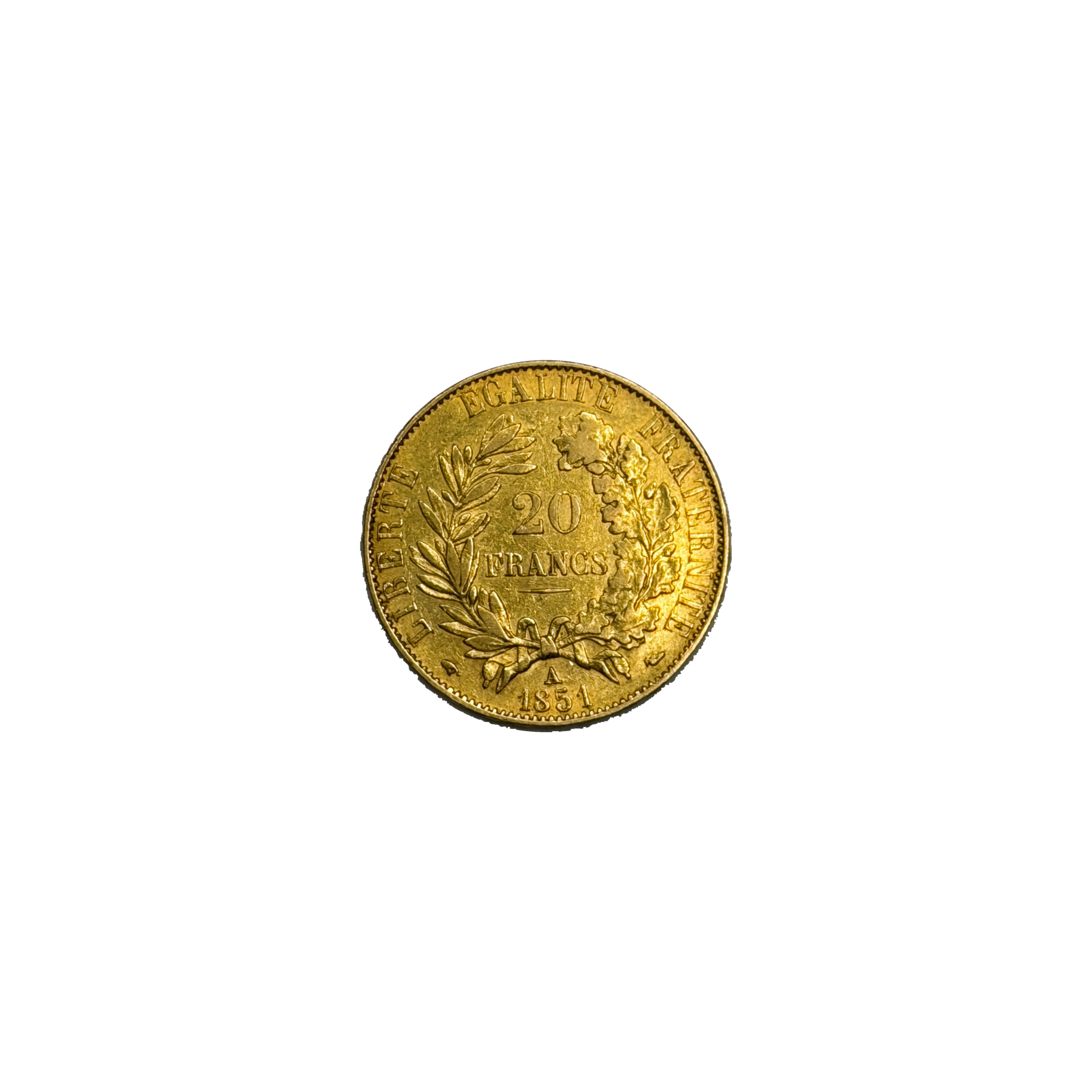
The French Ceres 20 franc had one of the shortest lives of any major European gold coin — three years, 1849 through 1851, the exact lifespan of the government that issued it. The Second Republic was born when the Revolution of 1848 ousted King Louis Philippe, elected Louis-Napoleon Bonaparte the first French president chosen by universal male suffrage, and died when that same president seized power in the coup of December 1851 and made himself Emperor Napoleon III. The Ceres was the Republic’s gold, and when the Republic ended, so did the coin — 16,721,082 pieces, the entire supply, forever.
The brevity is the argument. No other major French 20 franc type compresses its whole production into so narrow a window — the Angel series alone struck three-quarters as much in its single peak year of 1877 as the Ceres did in its lifetime, and Napoleon III went on to produce 14 times the Ceres total. Yet the coin trades as “historical bullion,” at per ounce acquisition costs comparable to modern bullion, tracking the spot price of gold over time — mid-nineteenth-century gold at close to the cost of the metal itself. It carries the historic (pre-1933) designation and the associated insulation against the possibility of future government intervention, and at roughly one-fifth of a troy ounce it offers divisible negotiability: affording its owner the flexibility to liquidate positions incrementally, in amounts proportionate to the specific needs of the moment and across a variety of circumstances. For investors whose priorities are notable scarcity from a fixed three-year mintage window, a coin steeped in the history of the Second Republic, and a standardized and widely recognized gold content—all for near-bullion pricing—the Ceres offers one of the narrowest supply windows in French gold, and one the market delivers only in small, irregular quantities.
The Second Republic faced a question every new republic faces: whose face goes on the money? Its answer was no one’s — or rather, everyone’s. The obverse bears not the elected president but the allegorical head of the Republic, Marianne, rendered in the guise of Ceres, the Roman goddess of agriculture and the harvest — her hair braided and crowned with a wreath of grain, a star above her head, facing right within the inscription RÉPUBLIQUE FRANÇAISE. The engraver, Louis Merley, signed L. MERLEY F. below. The reverse places the denomination and date within a wreath, encircled by the Republic’s motto — LIBERTÉ ÉGALITÉ FRATERNITÉ — with the Paris Mint’s A mark below.
At 21mm in diameter and 6.45 grams total weight, each coin is struck from .900 fine gold and contains 0.1867 troy ounces of actual gold content — the germinal franc standard shared across the entire French 20 franc family. Grade range: AU/XF. Minted 1849–1851.
The story compressed into these three dates is one of the most consequential in modern French history. The February Revolution of 1848 ended the monarchy of Louis Philippe and proclaimed the Second Republic, which promptly did something no major nation had done: it elected its head of state by universal male suffrage. The winner, on December 10, 1848, was Prince Louis-Napoleon Bonaparte, nephew of Napoleon Bonaparte, carried into office on the most famous name in France. When it became clear the constitution and the parliament would deny him a second term, he organized the coup of December 2, 1851, seized power, rewrote the constitution, and within a year proclaimed the Second Empire — taking the throne on December 2, 1852, forty-eight years to the day after his uncle’s coronation. The Republic lasted three years; the Ceres 20 franc marks each of them, and no others.
There is a fine irony for the holder: the coin of the president who became an emperor never bore his face. The Republic chose the harvest goddess over the politician — which is why the Ceres reads today less as one man’s coin than as the portrait of a brief, genuine experiment in republican government.
Scarcity claims in the French 20 franc family are always comparative, and the Ceres’s position is defined by its window rather than its rate of production. Its 16.7 million total stands against 233 million Napoleon IIIs and 89 million Angels — roughly one-fourteenth and one-fifth respectively — and its production ceased by force of political events, not market choice, in 1851. The first year is genuinely small on its own: 53,000 pieces in 1849, one of the lowest opening-date figures in the family. A supply fixed for more than 17 decades, spread thinly across collectors and investors on two continents, is the source’s practical observation that the Ceres is one of the harder pre-1900 European coins to locate in quantity. Because the family is priced off its most abundant members, little of that difference shows up in the coin’s cost of acquisition — the client gets the scarcity essentially free.
The Ceres trades as a full member of the French 20 franc family — the “Napoleons” that anchored fractional gold trading in Europe for over a century. Its specifications match the family and the broader Latin Monetary Union class exactly, dealers across Europe and North America recognize the type on sight, and it converts to cash as readily as its far more common siblings. The investor reaches the scarcer end of the family without leaving its deep, documented market.
In 1933, FDR issued Executive Order 6102, requiring Americans to surrender their gold coin and bullion to the Treasury — but the order and the regulations that followed it exempted gold coins of recognized special value to collectors of rare and unusual coins. Subsequent clarifications by the Treasury identified pre-1933 gold coins — a classification that includes the Ceres 20 franc, struck between 1849 and 1851 — as falling within that collector classification as historical items.
Under current constitutional law, a government intervention in the gold market would be executed through the power of eminent domain — the government’s right to take private property for public use provided it pays the owner just compensation. Historic coins complicate the government’s ability to broadly establish “just compensation” or “fair value,” which was precisely the reasoning behind the original “recognized special value” exemption in 1933. That complexity, and the precedent surrounding pre-1933 gold coins, creates a notable impediment to the government’s ability to restrict them broadly — particularly compared to modern bullion, which can be valued easily and consistently at a single price. In essence, it is a bureaucratic question of whether the government would undertake the enormous task of valuing the diversity and complexity of the historic-coin genre — every coin, every date, every condition, every personal holding — and that difficulty is what insulates the owner’s legal liquidity rights in the event of capital controls.
Whether a future government intervention in private gold markets is a risk an investor assigns significant weight to is a personal judgment. The factual point is narrower: the pre-1933 status represents a layer of portfolio differentiation that this coin carries at minimal added per-ounce cost over comparable modern bullion, along with a measure of insulation for the legal liquidity rights of its owner.
For a more in-depth study, we invite you to read our comprehensive memorandum on this subject: Preparing for a Potential Gold Confiscation
The French 20 Franc Ceres is the gold of a three-year republic — born of the Revolution of 1848, closed by the coup of 1851, its supply fixed permanently between those two dates. It combines one of the narrowest production windows in European gold with a standardized and widely recognized gold content and per ounce acquisition costs that belie coinage struck before the American Civil War — a highly coveted profile that surfaces only in small quantities. No other gold coin gives investors a complete, self-contained chapter of history — first year to last — at a cost this close to the metal itself.
| Year | Mintage |
|---|---|
| 1849 | 53,000 |
| 1850 | 3,964,000 |
| 1851 | 12,704,000 |
| Total | 16,721,000 |
XF, AU
1849-1851
.1867 troy ounce
France
| Quantity | Wire | Card |
|---|---|---|
| 1–26 | $890.66 | $927.77 |
| 27–53 | $881.75 | $918.49 |
| 54+ | $872.85 | $909.21 |
Quantity tiers reflect the historic & fractional gold order discount (1% at $25,000+ · 2% at $50,000+ in qualifying coins). Any mix of qualifying historic coins counts toward the same order total.
Prices shown under Wire include a 4% cash discount. Card prices are the full list price. ACH bank transfer is available to established clients only. First-time orders can be paid by wire transfer or card.
Interested in gold but struggling to find the right firm?

VF, XF
1825-1830
.1867 troy ounce
France
UNC, BU
1848/49, 1871 – 1898
.1867 troy ounce
France
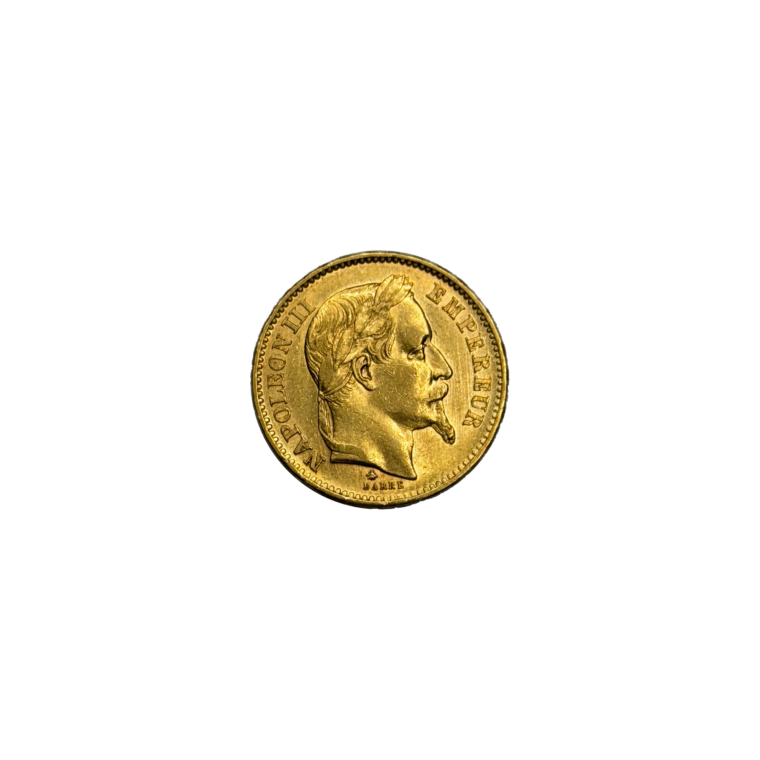
AU, UNC
1853-1870
.1867 troy ounce
France
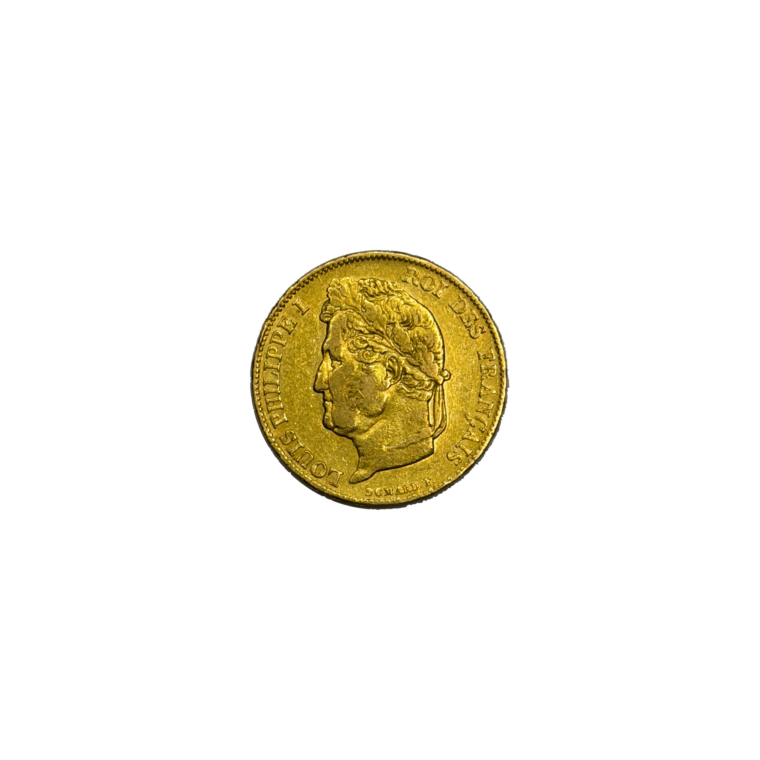
VF, XF
1830-1848
.1867 troy ounce
France
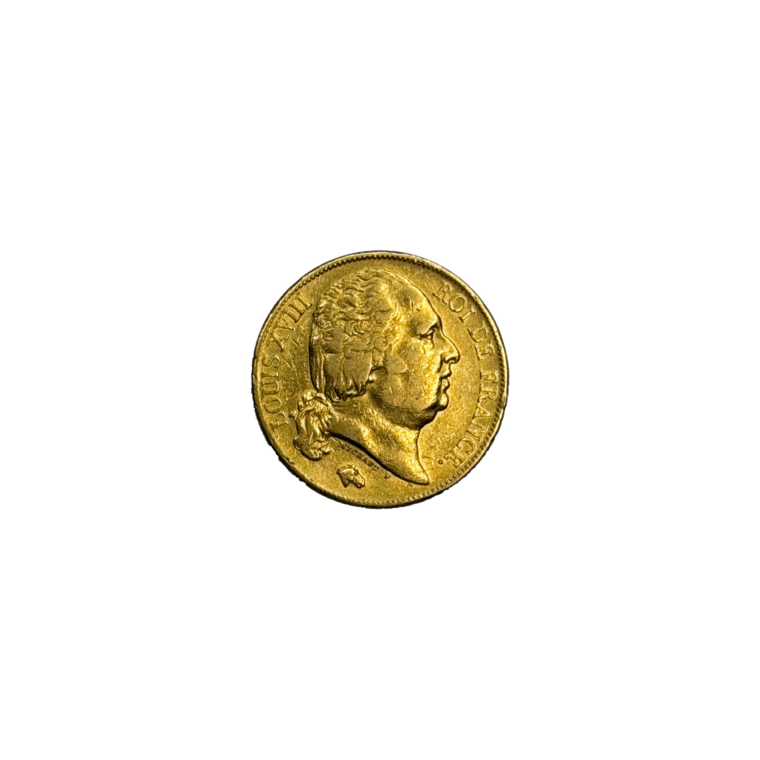
VF, XF
1814-1824
.1867 troy ounce
France
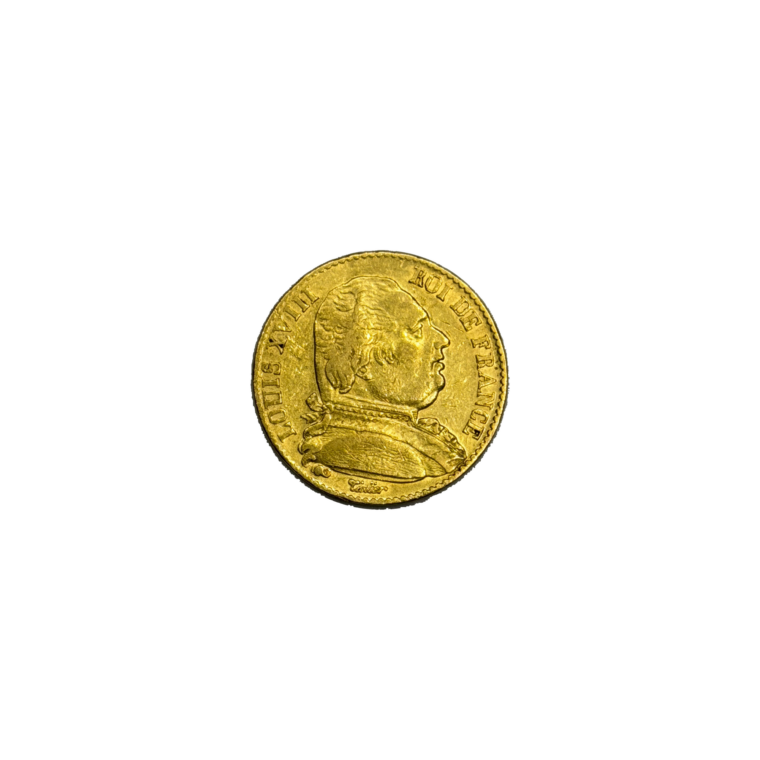
VF, XF
1814-1815
.1867 troy ounce
France
VF
1802-1815
.1867 troy ounce
France


