

You must have an order with a minimum of $1,000.00 to place your order, your current order total is $0.00.
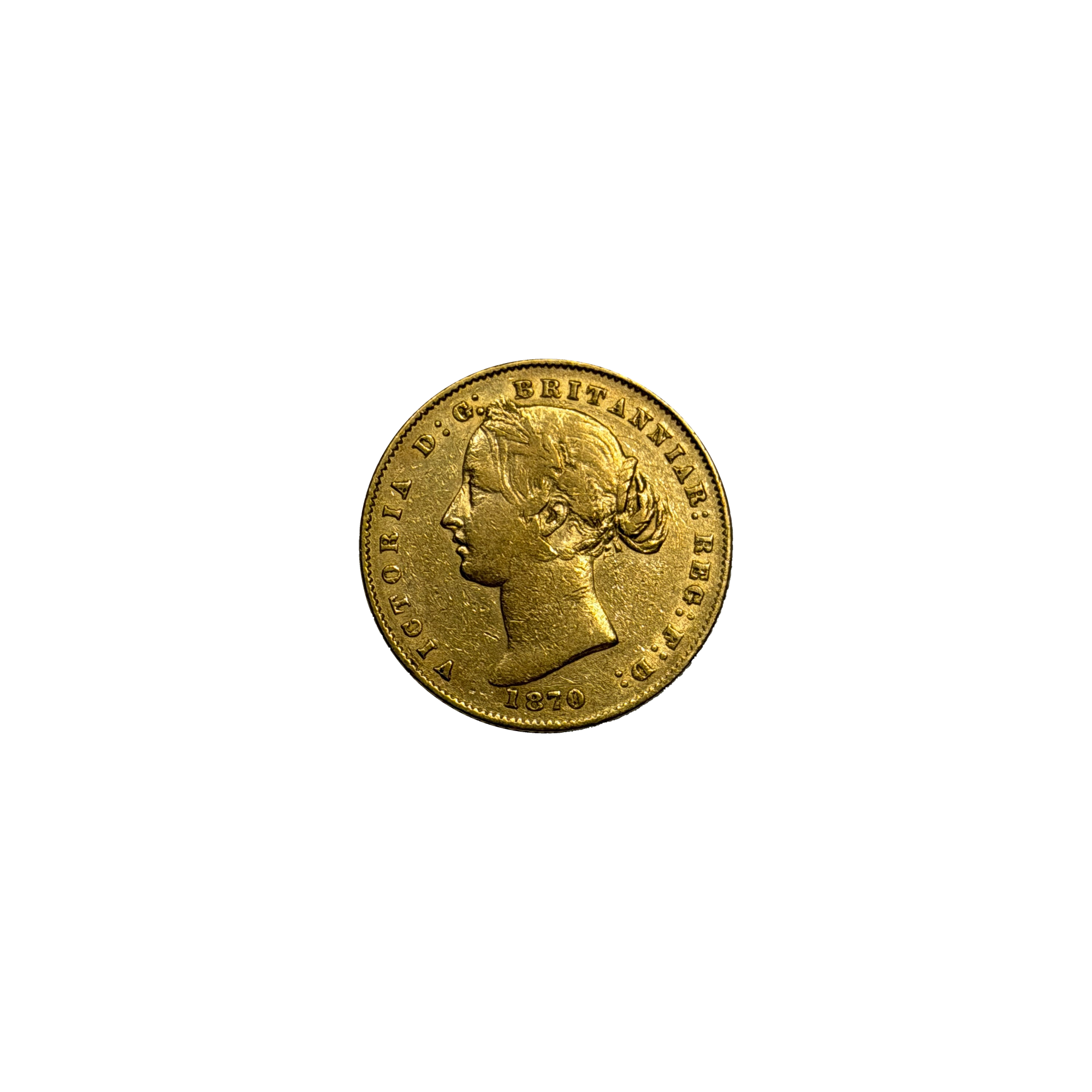
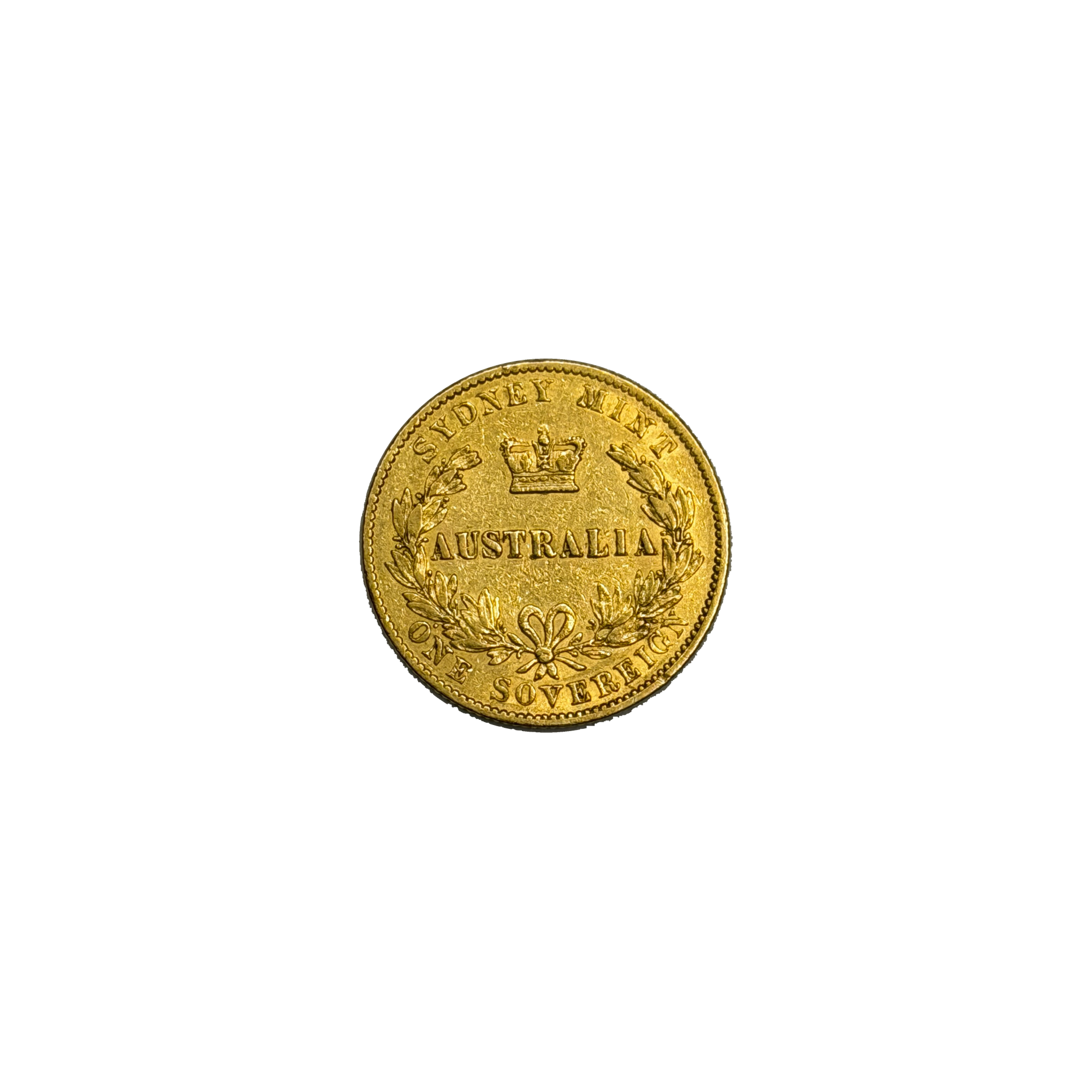
In 1851, gold was discovered in New South Wales, and within a few years Australia was producing a meaningful share of the world’s new gold. Rather than ship raw metal to London for coining, the British government authorized something without precedent: in 1855 it opened the Sydney Mint, the first branch of the Royal Mint, to strike sovereigns at the source. And for the first 16 years of its operation, the Sydney Mint did not strike the London design. Its sovereigns carried their own reverse, a crown above the word AUSTRALIA within a laurel wreath, encircled by the legend SYDNEY MINT · ONE SOVEREIGN. They remain the only sovereigns in the coin’s history to name a colony and a branch mint across their face.
For investors, that distinction adds a comparative-scarcity dimension to the world’s most recognized gold coin family. The Sydney Mint “Australia” sovereign carries the same 0.2354 troy ounces of 22-karat gold as every other sovereign and trades in the same deep international market, tracking the spot price of gold over time while carrying the historic (pre-1933) designation and the associated insulation against the possibility of future government intervention. Yet the entire Type II production of 1857–1870 totaled roughly 24.4 million pieces across 13 dates, less than the George V sovereign mints turned out in a single peak year. At roughly one-quarter of a troy ounce, the coin also offers divisible negotiability: affording its owner the flexibility to liquidate positions incrementally, in amounts proportionate to the specific needs of the moment and across a variety of circumstances. For investors whose priorities are a highly coveted coin steeped in gold-rush history, a design unique within the sovereign series, and comparative scarcity against the common types, all at near the cost of a common Victorian sovereign, the Sydney Mint “Australia” sovereign is the most distinctive coin of the Victorian sovereign series.
The obverse bears Leonard Charles Wyon’s portrait of the young Queen Victoria facing left, her hair tied with a wreath of banksia, a wildflower native to Australia, with the legend VICTORIA D:G: BRITANNIAR: REG: F:D: and the date below. The banksia wreath is the portrait’s identifying detail; it appears on no sovereign struck in London.
The reverse, also by Wyon, abandons the London designs entirely: a royal crown above AUSTRALIA, framed by a laurel wreath tied with a bow, with SYDNEY MINT across the top and ONE SOVEREIGN below. There is no mint mark, because the mint is named outright.
At approximately 22mm in diameter and 7.98 grams total weight, each coin is struck from 22-karat gold (.917 fine) and contains 0.2354 troy ounces of pure gold, valued at one pound sterling. Minted 1857–1870 at the Sydney Mint (Type II; KM-4). Grade range: AU. Dates vary; the coin pictured is dated 1870.
The Sydney Mint opened on May 14, 1855, an institutional milestone: the first time in the Royal Mint’s long history that sovereigns were struck at a facility outside Britain. It set the precedent for the empire-wide minting network that followed, with Melbourne in 1872, Perth in 1899, and Ottawa, Bombay, and Pretoria in the twentieth century.
The Sydney Mint’s earliest coins were initially given a status of their own. The first issue (Type I, 1855–1856) showed the young queen with a simple fillet, or ribbon, in her hair; in 1857 the portrait was redesigned with the banksia wreath that defines the Type II coins offered here. In their early years the Sydney coins were legal tender only in the Australian colonies; by the mid-1860s they had gained acceptance in Britain and across the empire. In 1871 the Sydney Mint adopted the standard London designs, the St. George and shield reverses with a small “S” mint mark, and the “Australia” reverse was retired.
The coins also carry a physical record of the gold that made them. Australian gold came from the ground naturally alloyed with silver rather than the copper the Royal Mint used, and many Sydney sovereigns show a paler, straw-yellow hue as a result, until a chlorine refining process developed by Francis Bowyer Miller and tested at the Sydney Mint in 1868 brought the coins to the exact London specification. A Sydney Mint “Australia” sovereign passed through the gold-rush economy directly, through miners’ banks, wool merchants, and shipping houses, before entering the worldwide circulation that all sovereigns shared.
The scarcity argument is comparative. The Type II Sydney Mint series comprises just 13 dates (no coins dated 1869 were struck; that year’s production carried the 1868 date) and a combined recorded mintage of 24,432,000 pieces, the largest single date being 1868 at 3.5 million. George V sovereigns, by contrast, were produced at peak rates exceeding 30 million pieces per year across seven mints. The Sydney series, in other words, amounts to less than one year of George V production at its height, and it has had more than 150 years of attrition. Much of Australia’s sovereign output was exported, and a large share of those coins were eventually melted and recoined.
Yet the Sydney Mint “Australia” sovereign, in AU condition, trades at near the price of the common Victorian sovereigns it sits beside in the catalog. That is the value: the client receives a distinctive, comparatively scarce issue at what is essentially common-sovereign pricing. Supply is the limiting factor. These coins reach the market irregularly and seldom in quantity.
The reverse changes the story, not the liquidity. A Sydney Mint “Australia” sovereign is still a sovereign, with identical weight, fineness, and gold content, struck under Royal Mint authority and recognized by dealers across North America, Europe, Asia, and Australia. Its specifications are universally documented, and it trades within the most liquid historic gold coin family in the world. In flight-to-safety episodes such as 2008 and the early-2010s European banking crisis, premiums rose modestly across historic sovereigns as a whole as supplies tightened, a dimension same-size modern bullion does not share. An investor gains the coin’s distinction without surrendering the sovereign’s convertibility.
In 1933, FDR issued Executive Order 6102, requiring Americans to surrender their gold coin and bullion to the Treasury, but the order and the regulations that followed it exempted gold coins of recognized special value to collectors of rare and unusual coins. Subsequent clarifications by the Treasury identified pre-1933 gold coins, a classification that includes the Sydney Mint “Australia” sovereign, struck between 1857 and 1870, as falling within that collector classification as historical items.
Under current constitutional law, a government intervention in the gold market would be executed through the power of eminent domain: the government’s right to take private property for public use, provided it pays the owner just compensation. Historic coins complicate the government’s ability to broadly establish “just compensation” or “fair value,” which was precisely the reasoning behind the original “recognized special value” exemption in 1933. That complexity, and the precedent surrounding pre-1933 gold coins, creates a notable impediment to the government’s ability to restrict them broadly, particularly compared to modern bullion, which can be valued easily and consistently at a single price. In essence, it is a bureaucratic question of whether the government would undertake the enormous task of valuing the diversity and complexity of the historic-coin genre (every coin, every date, every condition, every personal holding), and that difficulty is what insulates the owner’s legal liquidity rights in the event of capital controls.
Whether a future government intervention in private gold markets is a risk an investor assigns significant weight to is a personal judgment. The factual point is narrower: the pre-1933 status represents a layer of portfolio differentiation that this coin carries at minimal added per-ounce cost over comparable modern bullion, along with a measure of insulation for the legal liquidity rights of its owner.
For a more in-depth study, we invite you to read our comprehensive memorandum on this subject: Preparing for a Potential Gold Confiscation
The Sydney Mint “Australia” sovereign is the world’s most recognized gold coin with a gold-rush pedigree. It was struck from Australian gold at the first branch mint in Royal Mint history, it bears the banksia-wreathed portrait of the young Victoria, and it is the only sovereign to carry AUSTRALIA and SYDNEY MINT across its reverse. It pairs a 13-date series totaling less than one peak year of George V production with the sovereign family’s benchmark liquidity and quarter-ounce divisible negotiability, at near common-sovereign pricing. Because it is a highly coveted issue that reaches the market irregularly and seldom in quantity, availability is limited. No other sovereign offers this combination of frontier origin, a unique design, and comparative scarcity for gold investors.
| Year | Mintage |
|---|---|
| 1857 | 499,000 |
| 1858 | 1,101,000 |
| 1859 | 1,050,000 |
| 1860 | 1,573,000 |
| 1861 | 1,626,000 |
| 1862 | 2,477,000 |
| 1863 | 1,255,000 |
| 1864 | 2,698,000 |
| 1865 | 2,130,000 |
| 1866 | 2,911,000 |
| 1867 | 2,370,000 |
| 1868 | 3,522,000 |
| 1870 | 1,220,000 |
| Total | 24,432,000 |
Mintage figures per the Standard Catalog of World Coins (KM-4), via the NGC World Price Guide. Sydney Mint, Type II (banksia wreath), 1857–1870. No sovereigns dated 1869 were issued; NGC notes that 1,202,600 pieces struck in 1869 are dated 1868. For reference, the Type I issue (KM-2, fillet head) recorded 502,000 pieces in 1855 and 981,000 in 1856.
AU
1857-1870
.2354 troy ounce
Britain
| Quantity | Wire | Card |
|---|---|---|
| 1–20 | $1,144.94 | $1,192.65 |
| 21–41 | $1,133.49 | $1,180.72 |
| 42+ | $1,122.04 | $1,168.80 |
Quantity tiers reflect the historic & fractional gold order discount (1% at $25,000+ · 2% at $50,000+ in qualifying coins). Any mix of qualifying historic coins counts toward the same order total.
Prices shown under Wire include a 4% cash discount. Card prices are the full list price. ACH bank transfer is available to established clients only. First-time orders can be paid by wire transfer or card.
Interested in gold but struggling to find the right firm?

AU
1893-1901
.2354 troy ounce
Britain
AU
1838-1887
.2354 troy ounce
Britain
AU
1887-1893
.2354 troy ounce
Britain
AU, UNC, BU
1902-1910
.2354 troy ounce
Britain


