

You must have an order with a minimum of $1,000.00 to place your order, your current order total is $0.00.
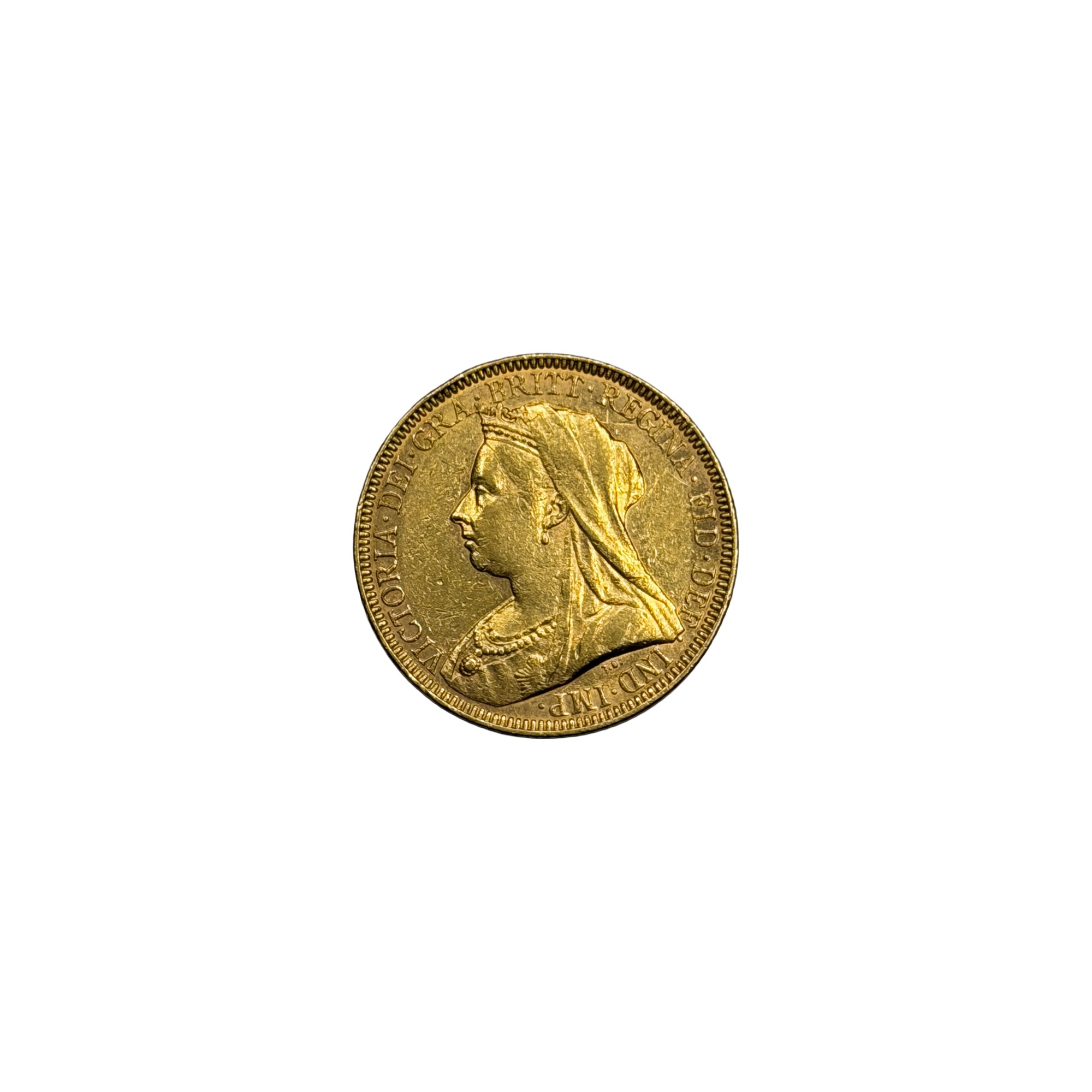
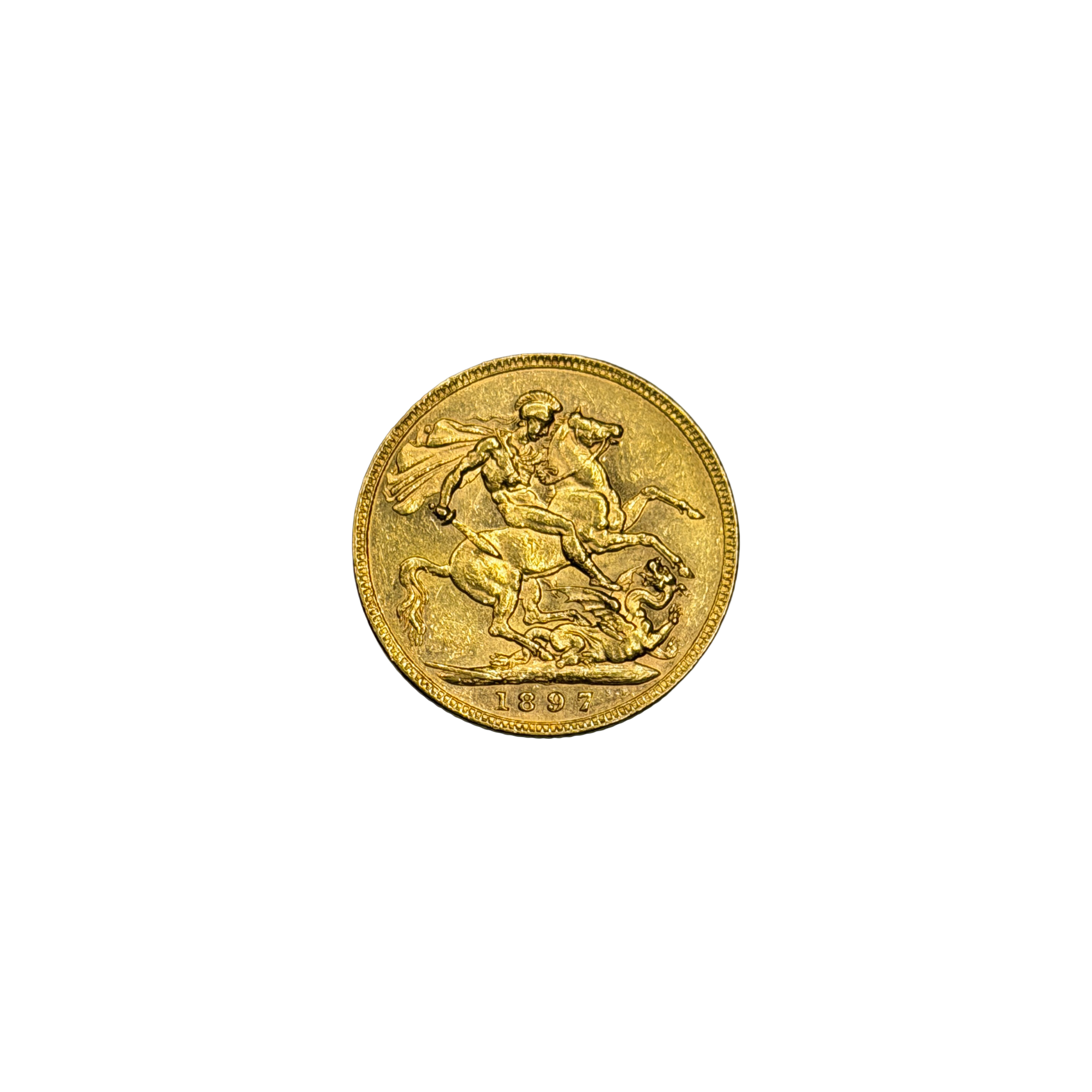
By 1893, Queen Victoria had outlasted every prediction, every prime minister of her youth, and most of the century itself. The Royal Mint’s third and final portrait of the queen — Sir Thomas Brock’s Veil Head, sometimes called the Old Head — shows her as the world then knew her: veiled in widow’s black since Prince Albert’s death three decades earlier, crowned, and unmistakably the most familiar face on earth. Struck from 1893 until her death in January 1901, the Veil Head sovereign is the closing act of the longest reign in British history to that point — sixty-three years and seven months, a record that stood until Elizabeth II.
For investors, the Veil Head offers the Victorian scarcity case in its final and most evocative form. Queen Victoria sovereigns have lower mintages and are considerably scarcer than the King sovereign issues of Edward VII and George V that followed, yet they trade as historical bullion — per ounce acquisition costs comparable to modern bullion coins, direct tracking of the gold spot price, and the pre-1933 designation’s insulation against the possibility of future government intervention. At roughly one-quarter of a troy ounce, the coin adds divisible negotiability: affording its owner the flexibility to liquidate positions incrementally, in amounts proportionate to the specific needs of the moment and across a variety of circumstances. For investors whose priorities are a coin steeped in the history of the Diamond Jubilee and the close of the Victorian age, comparative scarcity from an eight-year production window, and the liquidity of the world’s most recognized gold coin family—all for near-bullion pricing—the Veil Head is the last Victorian entry into the sovereign market.
The obverse bears Brock’s portrait of the elderly queen facing left, wearing a coronet and the widow’s veil that had defined her public image since 1861, with pearl necklace and the Garter riband across her shoulder. The legend — VICTORIA DEI GRA BRITT REGINA FID DEF IND IMP — is notable in its own right: the Veil Head brought the title Empress of India (IND IMP) into the sovereign’s obverse legend, the empire written directly onto the coin. The reverse carries Benedetto Pistrucci’s St. George and the Dragon, the design used with only minor modifications on British sovereigns since 1817.
At 22.05mm in diameter and 7.98 grams total weight, each coin is struck from 22-carat gold (.917 fine) and contains 0.2354 troy ounces of pure gold — legal tender at one pound sterling and Capital Gains Tax exempt in the United Kingdom. Grade range: AU. Minted 1893–1901. Veil Head sovereigns were struck at the Royal Mint in London and at the Australian branch mints in Melbourne, Sydney, and — from 1899 — Perth, whose first sovereigns belong to this type.
The Veil Head years, 1893 to 1901, are the coda of the Victorian age. The Diamond Jubilee of 1897 — sixty years on the throne, a milestone no British monarch had ever reached — brought troops and dignitaries from every corner of the empire down London streets lined with millions, a spectacle contemporaries understood as the largest demonstration of global power ever staged. Around it, the century was turning: the Klondike and Western Australian gold rushes fed the mints, the South African War began in 1899, and the queen who had given her name to the era grew visibly frail. She died at Osborne House on January 22, 1901, with her grandson Kaiser Wilhelm II at her bedside — the end of a reign that had begun before the railway network, the telegraph, and the modern empire itself.
The Veil Head sovereign is the coin of exactly those years — the money of the Diamond Jubilee and the last gold struck with Victoria’s image while she lived. For her full biography from accession at eighteen, see our Queen Victoria Young Head sovereign page; the Veil Head is where that story closes.
The comparative frame matters. George V sovereigns were struck at peak rates exceeding 30 million pieces per year across seven mints on five continents, within a St. George series that totaled more than 600 million coins between 1817 and 1932. Victoria’s issues, spread across three designs and six decades of far lower annual volumes, are considerably scarcer as a class — and the Veil Head’s eight-year window places it far closer to the Jubilee Head‘s six years than to the Young Head’s fifty. Yet the Veil Head still trades near the pricing of the common Kings issues — and that is the value: investors acquire the scarcer class at close to the common class’s cost, the scarcity coming along at little added expense.
The British sovereign is, alongside the French 20 Franc and the American $20 Double Eagle, one of the foundational instruments of the pre-1933 gold market — recognized on sight by dealers across North America, Europe, and Asia, universally documented, and liquid in virtually every market where gold changes hands. The Veil Head trades with that full sovereign liquidity: same specifications, same St. George reverse, same standard the market has priced for two centuries. Its Victorian scarcity rides on top of the liquidity rather than at its expense — the combination that distinguishes the sovereign’s scarcer types from genuinely numismatic coins, which trade on rarity first and gold second.
In 1933, FDR issued Executive Order 6102, requiring Americans to surrender their gold coin and bullion to the Treasury — but the order and the regulations that followed it exempted gold coins of recognized special value to collectors of rare and unusual coins. Subsequent clarifications by the Treasury identified pre-1933 gold coins — a classification that includes the Veil Head sovereign, struck between 1893 and 1901 — as falling within that collector classification as historical items.
Under current constitutional law, a government intervention in the gold market would be executed through the power of eminent domain — the government’s right to take private property for public use provided it pays the owner just compensation. Historic coins complicate the government’s ability to broadly establish “just compensation” or “fair value,” which was precisely the reasoning behind the original “recognized special value” exemption in 1933. That complexity, and the precedent surrounding pre-1933 gold coins, creates a notable impediment to the government’s ability to restrict them broadly — particularly compared to modern bullion, which can be valued easily and consistently at a single price. In essence, it is a bureaucratic question of whether the government would undertake the enormous task of valuing the diversity and complexity of the historic-coin genre — every coin, every date, every condition, every personal holding — and that difficulty is what insulates the owner’s legal liquidity rights in the event of capital controls.
Whether a future government intervention in private gold markets is a risk an investor assigns significant weight to is a personal judgment. The factual point is narrower: the pre-1933 status represents a layer of portfolio differentiation that this coin carries at minimal added per-ounce cost over comparable modern bullion, along with a measure of insulation for the legal liquidity rights of its owner.
For a more in-depth study, we invite you to read our comprehensive memorandum on this subject: Preparing for a Potential Gold Confiscation
The Veil Head sovereign is the longest reign in nineteenth-century history closing in 22-carat gold — the queen of the Diamond Jubilee, empress of India by title on the coin itself, struck for only eight years across four mints and considerably scarcer by class than the Kings issues that followed. It carries the sovereign’s on-sight global liquidity, near-bullion acquisition costs, UK Capital Gains Tax exemption, and fractional flexibility — and, like the scarcer Victorian types generally, it surfaces in the market irregularly and rarely in quantity. No other sovereign type pairs the close of the Victorian age with so many notable advantages for gold investors.
| Year | Mintage |
|---|---|
| 1893 | 6,898,000 |
| 1894 | 3,783,000 |
| 1895 | 2,285,000 |
| 1896 | 3,334,000 |
| 1897 | — |
| 1898 | 4,361,000 |
| 1899 | 7,516,000 |
| 1900 | 10,847,000 |
| 1901 | 1,579,000 |
| Total (listed figures) | 40,603,000 |
Mintage figures per the Standard Catalog of World Coins, via the NGC World Price Guide. Dates NGC lists without figures are shown with a dash. London Mint figures; branch-mint production additional. NGC lists no figure for 1897, a regular London date.
Learn More:
British Gold Sovereign Buyer’s Guide: Complete Investment Analysis
Each coin contains 0.2354 troy ounces of pure gold, struck in 22-carat (.917 fine) gold at 22.05mm diameter and 7.98 grams total weight.
From 1893 until Queen Victoria's death in January 1901. Sir Thomas Brock's Veil Head — sometimes called the Old Head — was the Royal Mint's third and final portrait of the queen, showing her crowned and wearing the widow's veil she had worn since Prince Albert's death.
The Royal Mint in London and the Australian branch mints in Melbourne, Sydney and — from 1899 — Perth, whose first sovereigns belong to this type.
Queen Victoria sovereigns have lower mintages and are considerably scarcer as a class than the Edward VII and George V King sovereign issues that followed. The Veil Head's eight-year production window places it far closer to the six-year Jubilee Head than to the fifty-year Young Head.
Yes — the sovereign is legal tender at one pound sterling and is Capital Gains Tax exempt in the United Kingdom. USAGOLD's Veil Head sovereigns grade AU (About Uncirculated).
AU
1893-1901
.2354 troy ounce
Britain
| Quantity | Wire | Card |
|---|---|---|
| 1–21 | $1,123.92 | $1,170.75 |
| 22–42 | $1,112.68 | $1,159.04 |
| 43+ | $1,101.44 | $1,147.34 |
Quantity tiers reflect the historic & fractional gold order discount (1% at $25,000+ · 2% at $50,000+ in qualifying coins). Any mix of qualifying historic coins counts toward the same order total.
Prices shown under Wire include a 4% cash discount. Card prices are the full list price. ACH bank transfer is available to established clients only. First-time orders can be paid by wire transfer or card.
Interested in gold but struggling to find the right firm?

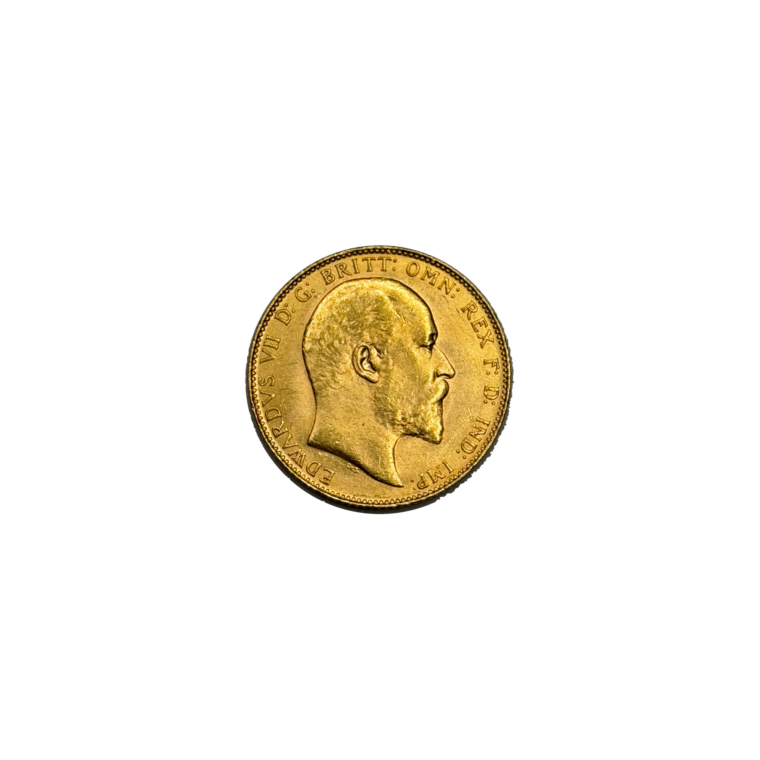
AU, UNC, BU
1902-1910
.2354 troy ounce
Britain
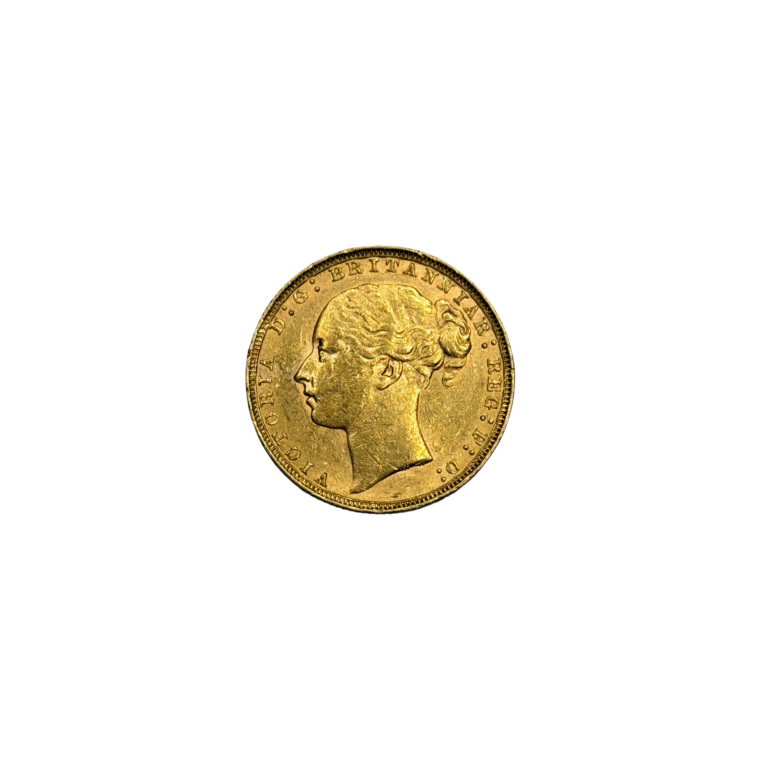
XF, AU
1871-1885
.2354 troy ounce
Britain
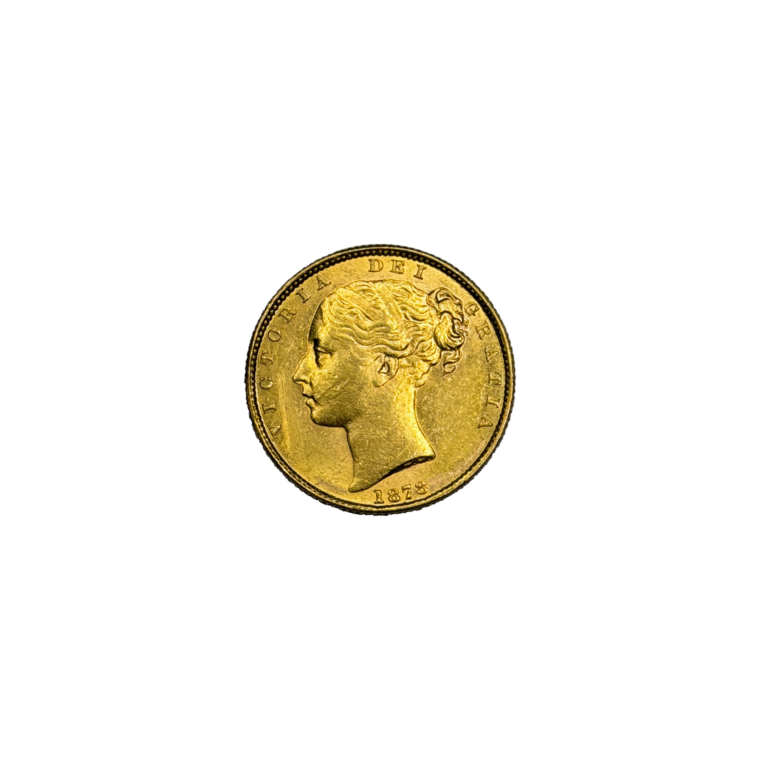
AU
1838-1887
.2354 troy ounce
Britain
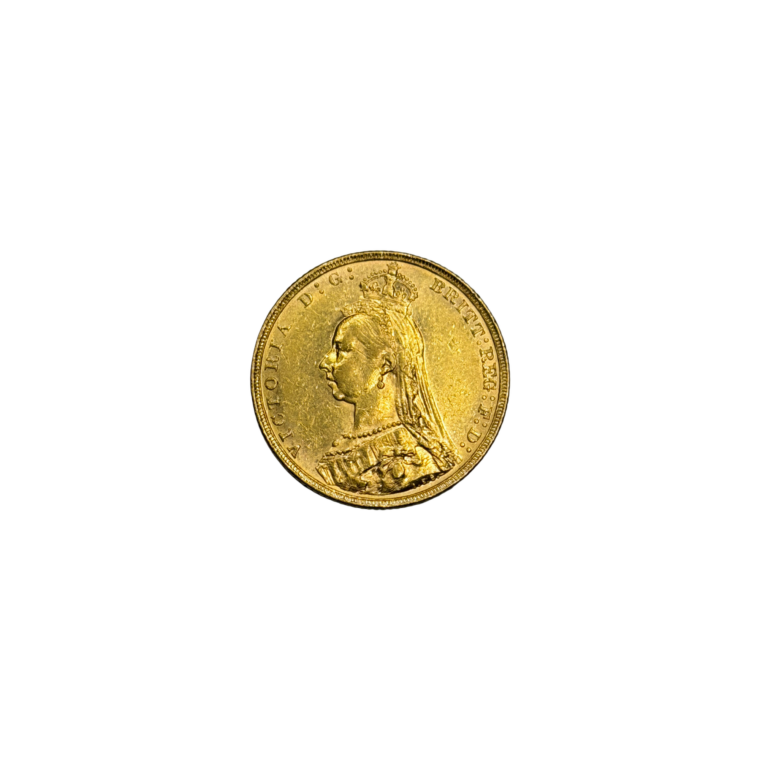
AU
1887-1893
.2354 troy ounce
Britain


