

You must have an order with a minimum of $1,000.00 to place your order, your current order total is $0.00.
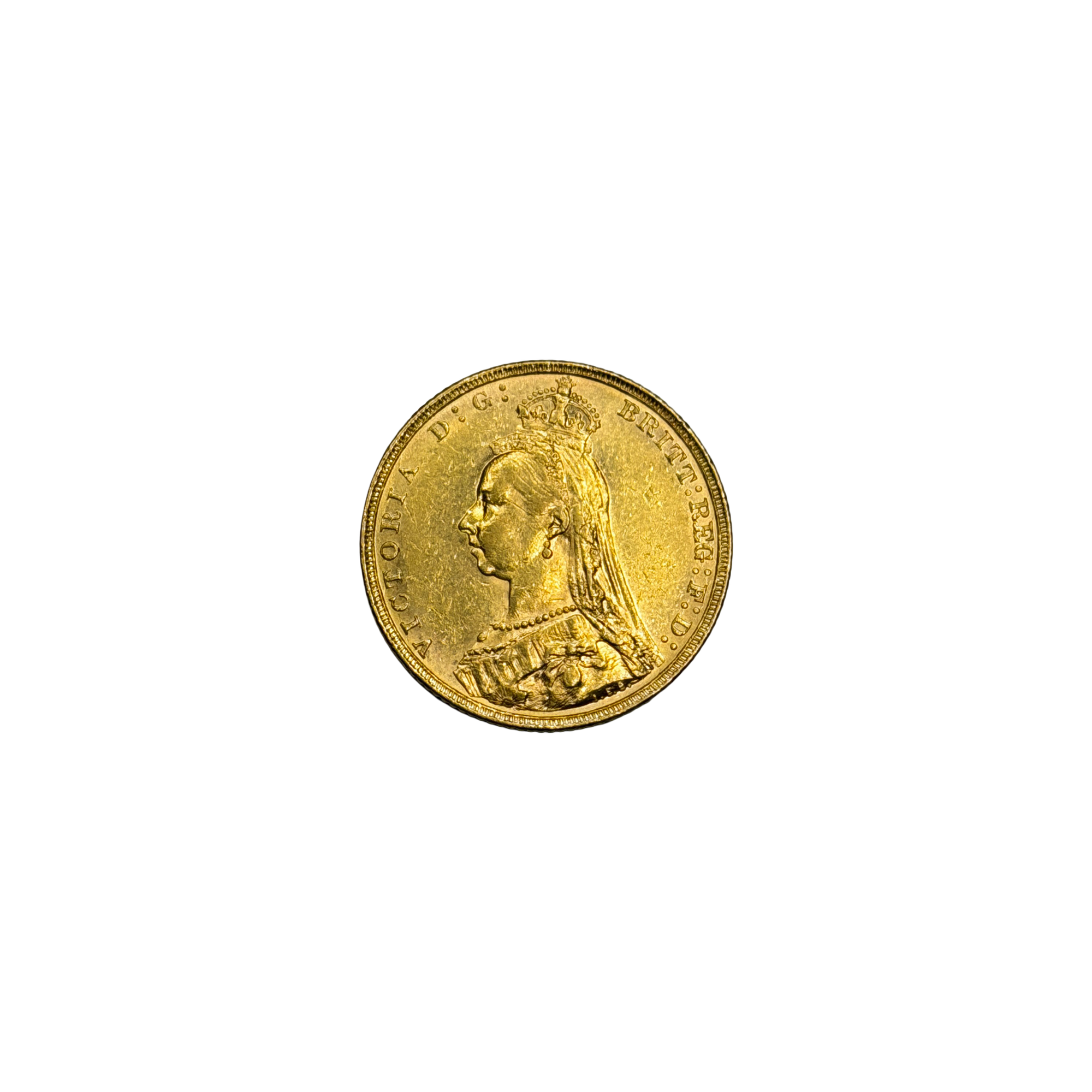
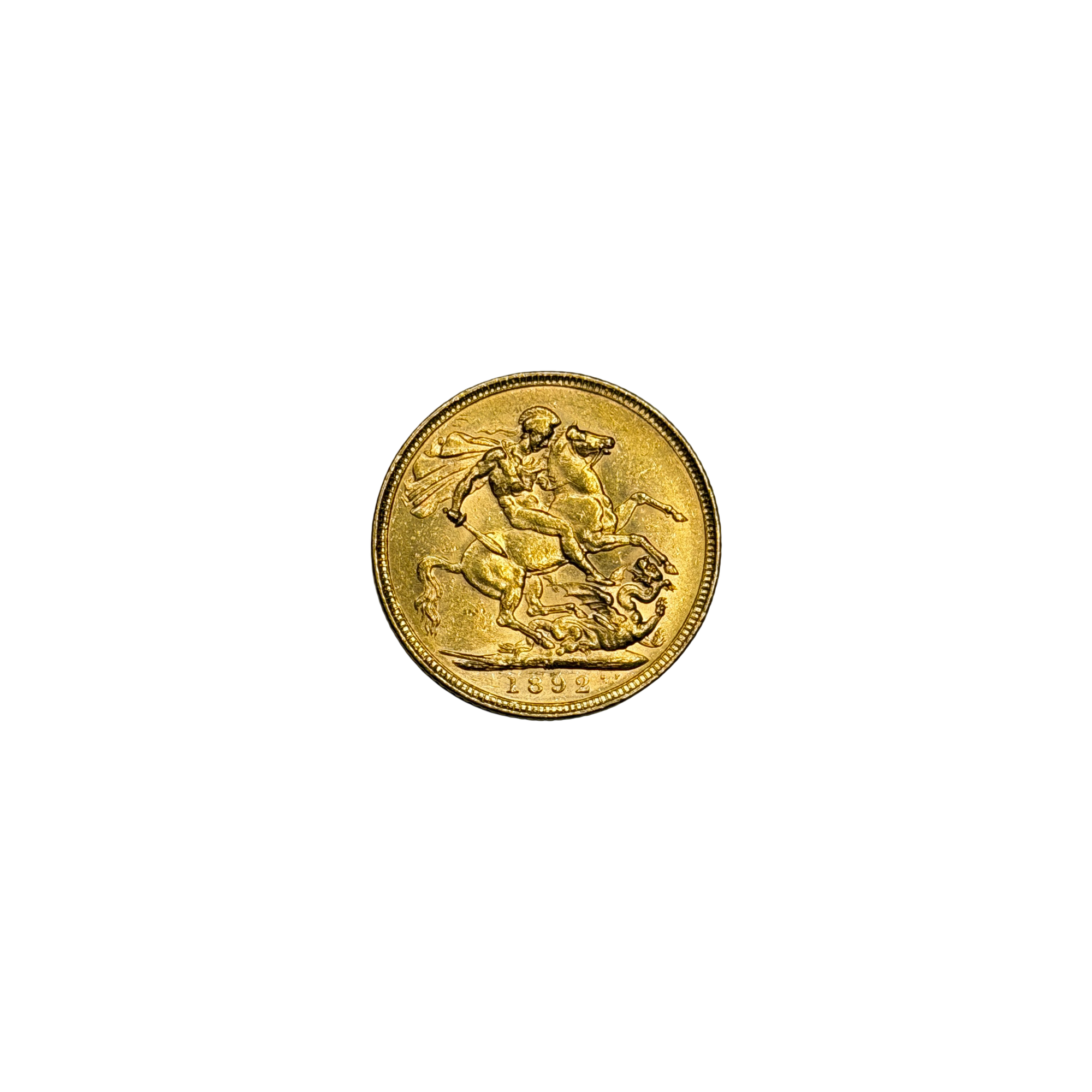
In the summer of 1887, Britain marked the Golden Jubilee — fifty years of Queen Victoria’s reign — with celebrations that drew kings, emperors, and princes from across Europe to London. To accompany the occasion, the Royal Mint retired William Wyon’s Young Head portrait after nearly half a century and introduced a new obverse: Sir Joseph Edgar Boehm’s crowned and veiled bust of the queen at the height of her authority. The Jubilee Head sovereign was struck for only six years, 1887 through 1893 — the shortest-lived of Victoria’s three sovereign portraits, minted at the precise moment the British Empire stood at its Victorian apex.
For investors, that combination — a globally recognized instrument in its briefest Victorian form — is the argument. Queen Victoria sovereigns as a class have lower mintages and are considerably scarcer than the King sovereign issues of Edward VII and George V that followed, and within the Victorian series the Jubilee Head’s six-year window makes its supply structurally thinner than the Young Head’s fifty. Yet the coin still trades as historical bullion: per ounce acquisition costs comparable to modern bullion, direct tracking of the gold spot price, the pre-1933 designation’s insulation against possible future government intervention, and — at roughly one-quarter of a troy ounce — the divisible negotiability that lets a holding be liquidated incrementally, in amounts proportionate to the specific needs of the moment and across a variety of circumstances. For investors whose priorities are a highly coveted portrait steeped in the pageantry of the Golden Jubilee, notable comparative scarcity from a six-year production window, and the recognizability and liquidity of the sovereign family—all for near-bullion pricing—the Jubilee Head is the tightest supply window in the Victorian sovereign series.
The obverse bears Boehm’s portrait of Victoria facing left, wearing a small crown over her widow’s veil, with earring and pearl necklace — the legend reads VICTORIA D:G: BRITT: REG: F:D:, and the designer’s initials J.E.B. appear at the truncation of the bust. The portrait is a period piece in the most literal sense: contemporaries famously debated the smallness of the crown perched on the veil, and the design was replaced after only six years — a controversy that gave the type its distinct identity and its brief production life. The reverse carries Benedetto Pistrucci’s St. George and the Dragon, the design used with only minor modifications on British sovereigns since 1817.
At 22.05mm in diameter and 7.98 grams total weight, each coin is struck from 22-carat gold (.917 fine) and contains 0.2354 troy ounces of pure gold — legal tender at one pound sterling and Capital Gains Tax exempt in the United Kingdom. Grade range: AU. Minted 1887–1893. Jubilee Head sovereigns were struck at the Royal Mint in London and at the Australian branch mints in Melbourne and Sydney.
The Jubilee Head years capture the British Empire at the moment its nineteenth-century supremacy looked most complete. Victoria had been Empress of India for a decade. The Royal Navy commanded the seas without serious rival, London stood unchallenged as the trading and financial capital of the world, and the sovereign itself anchored the international gold standard — British financial solidity, struck in 22-carat gold. The Golden Jubilee of 1887 was the public celebration of all of it: an empire-wide festival that doubled as a demonstration of reach, with delegations from every continent converging on Westminster Abbey.
The coins struck in those six years circulated through that world as working money — settling accounts from London to Sydney in the era when the phrase “the sun never sets on the Empire” was a plain description rather than nostalgia. For the fuller story of Victoria’s reign from her accession at eighteen, see our Queen Victoria Young Head sovereign page; the Jubilee Head is the portrait of the queen those fifty years produced — no longer the young monarch, now the institution itself.
Scarcity claims deserve numbers and named comparisons. George V sovereigns were struck at peak rates exceeding 30 million pieces per year across seven mints on five continents, and more than 600 million St. George sovereigns were minted between 1817 and 1932. Against that benchmark, the Victorian issues are considerably scarcer as a class — and the Jubilee Head occupies the narrowest production window of Victoria’s three portraits: six years, from three mints, against the Young Head’s five decades and the Kings’ continuous high-volume output through 1932. The market prices the Jubilee Head near the other sovereign types — which is precisely the value: a structurally thinner supply acquired at close to the cost of the most common types, the narrowest production window in the Victorian series included at little added cost.
The British sovereign is, alongside the French 20 Franc and the American $20 Double Eagle, one of the foundational instruments of the pre-1933 gold market — recognized on sight by dealers across North America, Europe, and Asia, with universally documented specifications and bid-ask spreads kept tight by one of the deepest trading histories in gold. The Jubilee Head inherits that standing in full: it is the same 0.2354-ounce, .917 fine instrument as every other sovereign, priced off the same standard and liquid in the same markets. What it adds is the scarcity dimension — a coin that trades with the sovereign’s liquidity while carrying a supply profile the common types cannot match.
In 1933, FDR issued Executive Order 6102, requiring Americans to surrender their gold coin and bullion to the Treasury — but the order and the regulations that followed it exempted gold coins of recognized special value to collectors of rare and unusual coins. Subsequent clarifications by the Treasury identified pre-1933 gold coins — a classification that includes the Jubilee Head sovereign, struck between 1887 and 1893 — as falling within that collector classification as historical items.
Under current constitutional law, a government intervention in the gold market would be executed through the power of eminent domain — the government’s right to take private property for public use provided it pays the owner just compensation. Historic coins complicate the government’s ability to broadly establish “just compensation” or “fair value,” which was precisely the reasoning behind the original “recognized special value” exemption in 1933. That complexity, and the precedent surrounding pre-1933 gold coins, creates a notable impediment to the government’s ability to restrict them broadly — particularly compared to modern bullion, which can be valued easily and consistently at a single price. In essence, it is a bureaucratic question of whether the government would undertake the enormous task of valuing the diversity and complexity of the historic-coin genre — every coin, every date, every condition, every personal holding — and that difficulty is what insulates the owner’s legal liquidity rights in the event of capital controls.
Whether a future government intervention in private gold markets is a risk an investor assigns significant weight to is a personal judgment. The factual point is narrower: the pre-1933 status represents a layer of portfolio differentiation that this coin carries at minimal added per-ounce cost over comparable modern bullion, along with a measure of insulation for the legal liquidity rights of its owner.
For a more in-depth study, we invite you to read our comprehensive memorandum on this subject: Preparing for a Potential Gold Confiscation
The Jubilee Head sovereign is the British Empire’s high-water mark rendered in 22-carat gold — a six-year portrait struck for a fifty-year celebration, scarcer by class than the Kings issues that followed and thinner in supply than any other Victorian sovereign type, yet still available at near-bullion acquisition costs with the sovereign’s unmatched global liquidity and UK Capital Gains Tax exemption. A window this brief is rarely available in quantity, and positions are quickly subscribed when coins surface. No other sovereign type combines so brief a production window with so complete a set of advantages for gold investors.
| Year | Mintage |
|---|---|
| 1887 | 1,111,000 |
| 1888 | 2,777,000 |
| 1889 | 7,257,000 |
| 1890 | 6,530,000 |
| 1891 | 6,329,000 |
| 1892 | 7,105,000 |
| Total | 31,109,000 |
Mintage figures per the Standard Catalog of World Coins, via the NGC World Price Guide. Dates NGC lists without figures are shown with a dash. London Mint figures; branch-mint production additional. An 1887 proof issue of 797 pieces was also struck.
Learn More:
British Gold Sovereign Buyer’s Guide: Complete Investment Analysis
Each coin weighs 7.98 grams, is struck in 22-carat gold (.917 fine), and contains 0.2354 troy ounces of pure gold, with a diameter of 22.05 mm.
Only from 1887 through 1893 - six years, the shortest-lived of Queen Victoria's three sovereign portraits. They were struck at the Royal Mint in London and at the Australian branch mints in Melbourne and Sydney.
The obverse bears Sir Joseph Edgar Boehm's portrait of Victoria wearing a small crown over her widow's veil, introduced for her 1887 Golden Jubilee. The reverse carries Benedetto Pistrucci's St. George and the Dragon, used on British sovereigns since 1817.
Its six-year production window makes its supply structurally thinner than the Young Head's fifty years, and Queen Victoria sovereigns as a class have lower mintages than the Edward VII and George V issues that followed.
Yes - it remains legal tender at one pound sterling and is Capital Gains Tax exempt in the United Kingdom.
The grade range is AU (About Uncirculated).
AU
1887-1893
.2354 troy ounce
Britain
| Quantity | Wire / ACH | Card |
|---|---|---|
| 1–20 | $1,148.45 | $1,196.30 |
| 21–41 | $1,136.97 | $1,184.34 |
| 42+ | $1,125.48 | $1,172.37 |
Quantity tiers reflect the historic & fractional gold order discount (1% at $25,000+ · 2% at $50,000+ in qualifying coins). Any mix of qualifying historic coins counts toward the same order total.
Prices shown under Wire/ACH include a 4% cash discount. Card prices are the full list price.
Interested in gold but struggling to find the right firm?

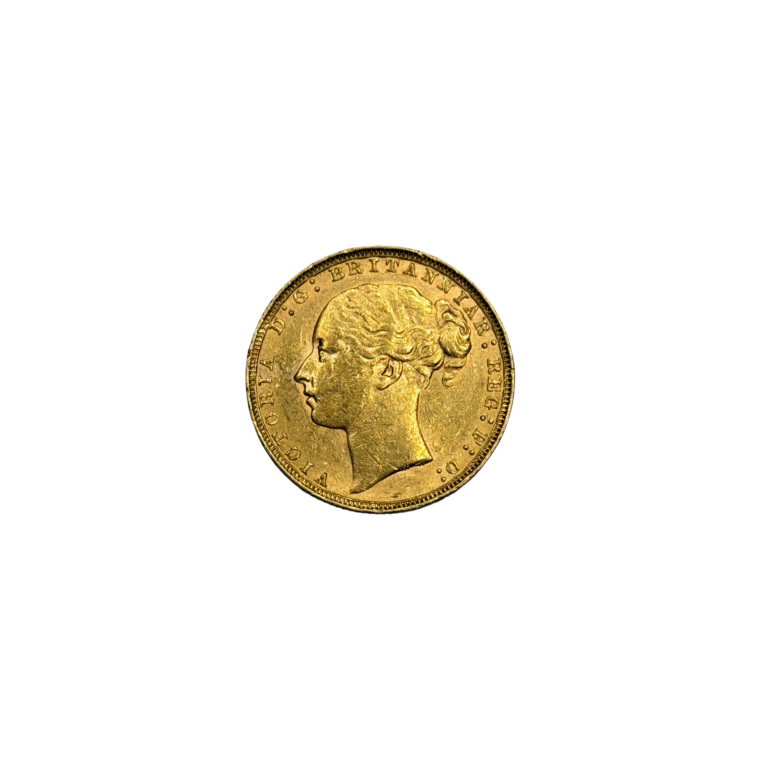
XF, AU
1871-1885
.2354 troy ounce
Britain
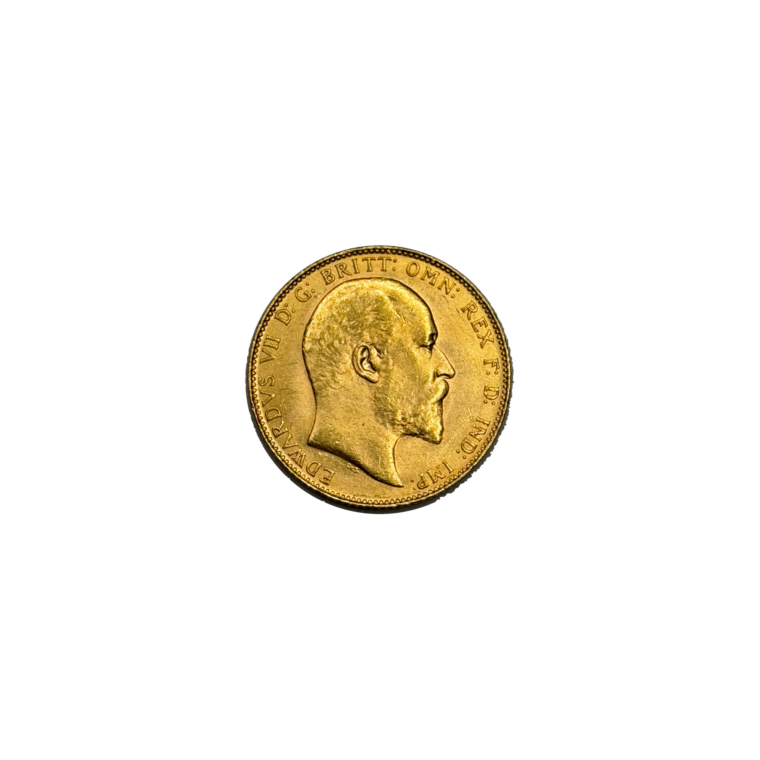
AU, UNC, BU
1902-1910
.2354 troy ounce
Britain
AU
1838-1874
.2354 troy ounce
Britain
AU
1893-1901
.2354 troy ounce
Britain


