

You must have an order with a minimum of $1,000.00 to place your order, your current order total is $0.00.
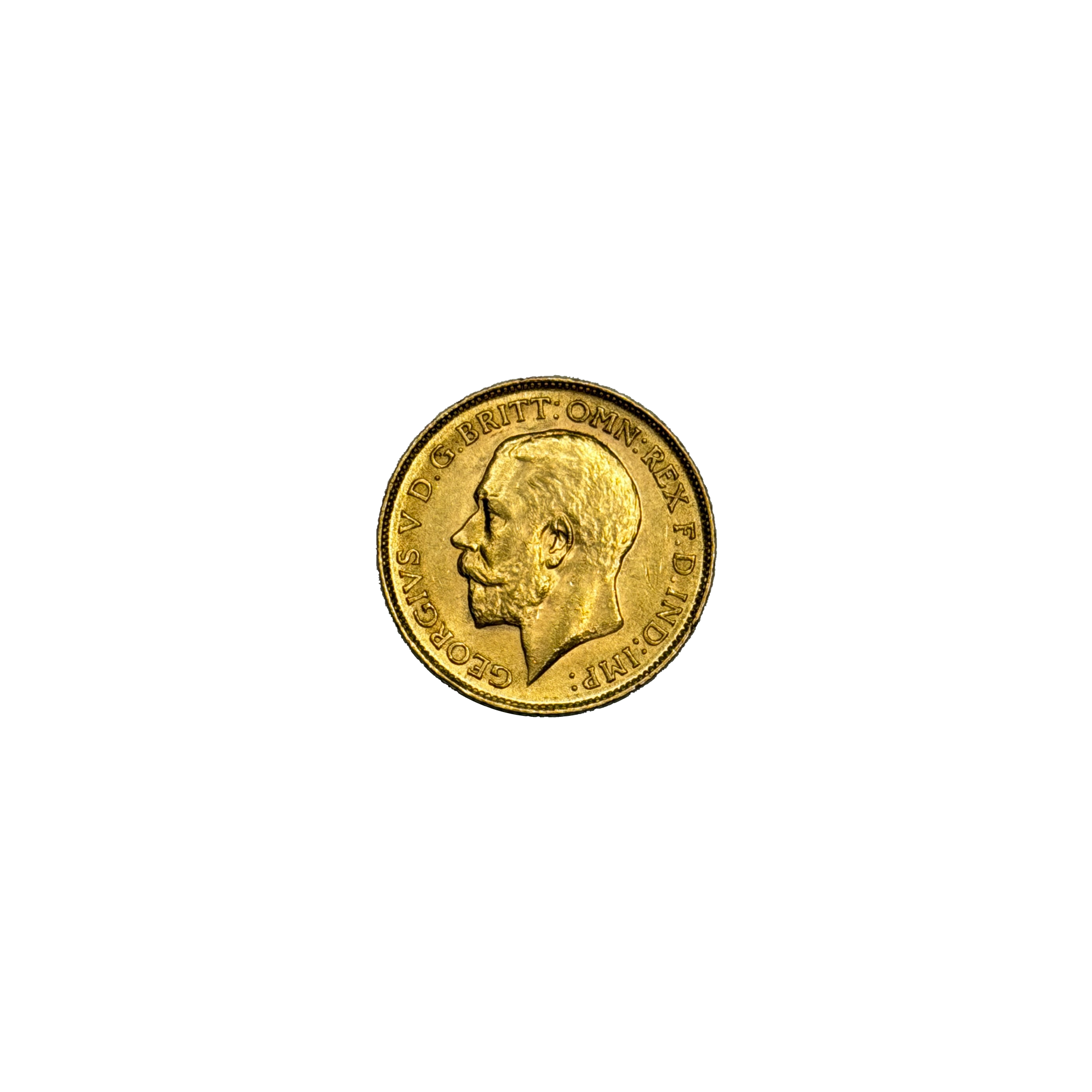
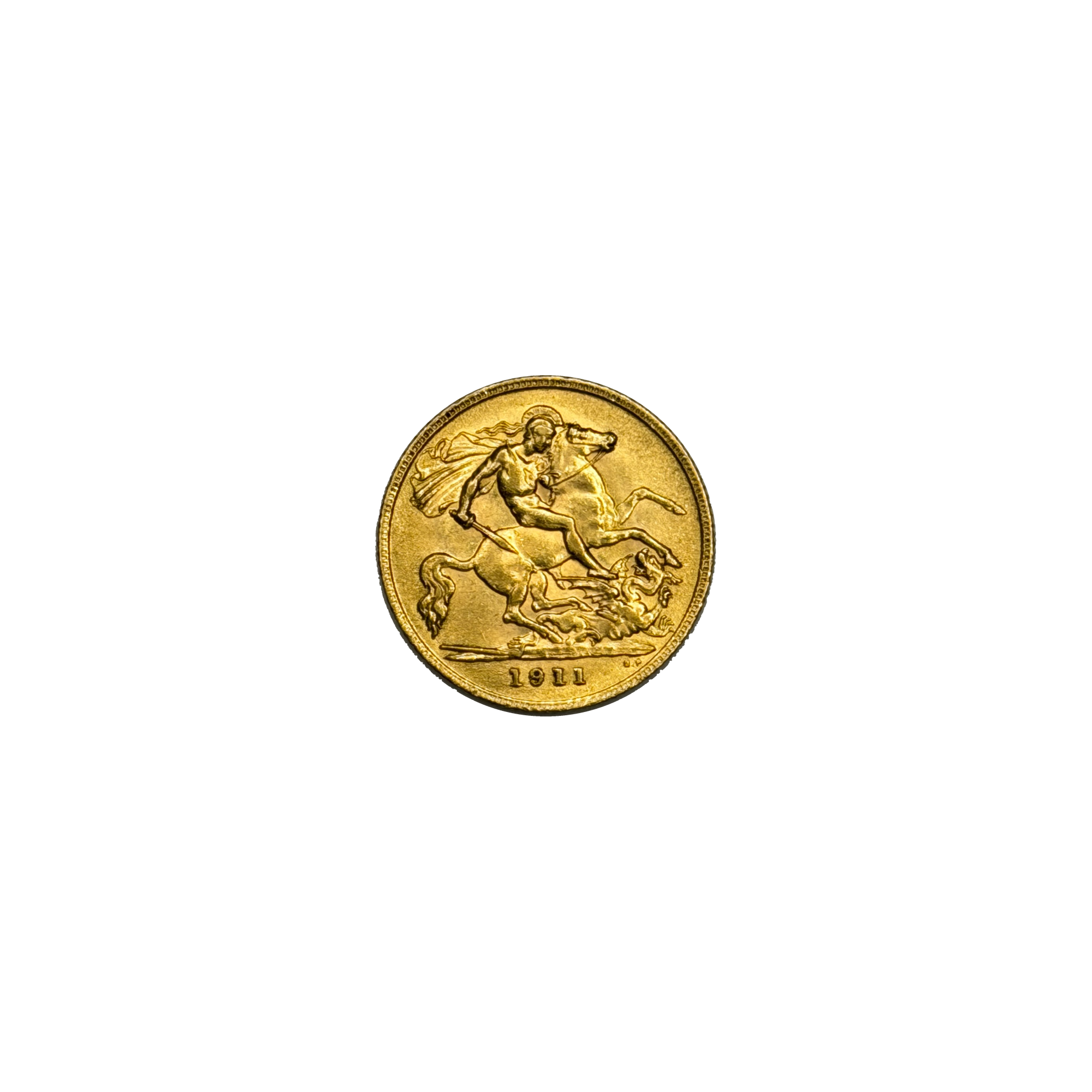
The British sovereign is probably the most widely owned and recognized gold coin in the world — so much so that the U.S. Army included sovereigns in its special forces survival packs for a number of years, on the judgment that no other coin would be accepted as money in more places. The half sovereign is that instrument at half scale: 0.1177 troy ounces of 22-carat gold, struck to the same standard, bearing the same Pistrucci St. George reverse, and recognized by the same dealers in the same markets worldwide. The George V issues offered here were struck from 1911 to 1915 — the last half sovereigns to circulate as everyday British money before the First World War removed gold from daily circulation.
What the half sovereign adds is accessibility and precision. A few coins in the historic fractional genre are smaller still — the Austrian 10 Corona and the Netherlands 5 Gulden among them — but none of them carries the sovereign’s recognition. The half sovereign is the smallest coin in the market that trades on the sovereign name: one of the lowest absolute price points in classic pre-1933 gold, in the coin family dealers on every continent know on sight, offering divisible negotiability in increments half the size of the full sovereign or the European 20 franc class. For investors whose priorities are recognizability, liquidity, and flexibility at the smallest size and lowest entry cost the sovereign family offers, the half sovereign occupies a position no other coin in the catalog can duplicate.
The obverse bears Sir Edgar Bertram Mackennal’s portrait of King George V — the same portrait carried by the full sovereigns of his reign. The reverse carries Benedetto Pistrucci’s St. George and the Dragon, the design introduced on British gold in 1817 and still in production today — among the longest-running images in the history of coinage.
At 19.3mm in diameter and 3.99 grams total weight, each coin is struck from 22-carat gold (.917 fine) and contains 0.1177 troy ounces of pure gold — exactly half the full sovereign’s 0.2354 ounces. The half sovereign is legal tender in the United Kingdom and, as legal tender currency, is Capital Gains Tax exempt for UK persons. Minted 1911–1915. Grade range: AU/UNC.
George V succeeded his father Edward VII in 1910 and led Britain through the First World War and into the Depression. His background was naval — he had served as an officer in the Royal Navy before his elder brother’s death made him heir apparent — and he brought to the monarchy a preference for duty over ceremony. He renounced his German family name in 1917, adopting Windsor for the royal house, and remade the monarchy into the steady, representative institution it remains. The half sovereigns offered here were struck in the reign’s opening years, 1911 through 1915 — the last confident seasons of the gold standard, ending when the war pulled gold out of British pockets and into bank vaults. Edwardian half sovereigns from the preceding reign exist in the market as well; the George V issues are the type USAGOLD stocks, and the final chapter of the denomination as circulating money.
The first British sovereign was minted under Henry VII in 1489 — named for its majestic image of the monarch enthroned. The modern design, with the monarch on the obverse and St. George slaying the dragon on the reverse, was introduced in 1816–1817 under George III, and more than 600 million St. George sovereigns were struck between then and 1932, when Britain left the gold standard. Minting resumed in 1957 with Elizabeth II on the obverse, giving the sovereign a distinction no other coin holds: it is the only pre-1933 gold coin whose design carried over into the modern era. The George V half sovereigns belong to the final years of the coin’s life as actual circulating money — gold that passed through British hands as currency, not as a collectible.
The half sovereign’s defining practical advantage is its combination of size and standing. At 0.1177 ounces of gold, it sits among the lowest absolute price points in classic pre-1933 gold — one of the most accessible entry points into the genre for a new investor, and a fine-grained unit of liquidation for an established holding. Gold’s utility as a reserve asset depends partly on the ability to convert exactly as much as circumstances require and no more; a holding that includes half sovereigns can be drawn down in steps roughly half the size the full sovereign or the European 20 franc family permits. Fractional gold of this size commands a somewhat higher premium per ounce than larger coins — that is the market’s price for divisibility — and among the genre’s small coins, the half sovereign’s premium is kept honest by the depth of the sovereign market. The Austrian 10 Corona and Netherlands 5 Gulden offer smaller units still for investors prioritizing minimum size; the half sovereign offers small size with maximum recognition. The 1911–1915 window of the coins offered here, cut short by the war, also represents a tighter supply base than the full sovereigns of the same reign, which continued at branch mints into the 1930s.
It is worth noting in passing that this fixed supply — a trait the half sovereign shares with every coin in the historic genre — has shown its worth in periods of financial stress. In 2008, premiums rose across the whole European historic-coin market on limited supplies, the common types along with the rare; in the early 2010s, Greek and other European savers seeking an exit from a strained banking system turned to sovereigns, and premiums firmed across the family. Bullion coins at the same per-ounce price, minted continuously to meet demand, never behave this way — a quiet additional advantage the historic coin carries at no extra cost.
The half sovereign inherits the full sovereign’s standing: recognized on sight by dealers across North America, Europe, and Asia, with universally documented specifications and a market deep enough that bid-ask spreads remain tight. Original quantities still surface in the market from European holdings, and the coin trades wherever gold trades. For an investor who wants the world’s most recognized gold coin family in its most flexible denomination, the half sovereign is the instrument — with the UK’s Capital Gains Tax exemption as a further advantage for those with British tax exposure.
In 1933, FDR issued Executive Order 6102, requiring Americans to surrender their gold coin and bullion to the Treasury — but the order and the regulations that followed it exempted gold coins of recognized special value to collectors of rare and unusual coins. Subsequent clarifications by the Treasury identified pre-1933 gold coins — a classification that includes the George V half sovereign, struck between 1911 and 1915 — as falling within that collector classification as historical items.
Under current constitutional law, a government intervention in the gold market would be executed through the power of eminent domain — the government’s right to take private property for public use provided it pays the owner just compensation. Historic coins complicate the government’s ability to broadly establish “just compensation” or “fair value,” which was precisely the reasoning behind the original “recognized special value” exemption in 1933. That complexity, and the precedent surrounding pre-1933 gold coins, creates a notable impediment to the government’s ability to restrict them broadly — particularly compared to modern bullion, which can be valued easily and consistently at a single price. In essence, it is a bureaucratic question of whether the government would undertake the enormous task of valuing the diversity and complexity of the historic-coin genre — every coin, every date, every condition, every personal holding — and that difficulty is what insulates the owner’s legal liquidity rights in the event of capital controls.
Whether a future government intervention in private gold markets is a risk an investor assigns significant weight to is a personal judgment. The factual point is narrower: the pre-1933 status represents a layer of portfolio differentiation that this coin carries at minimal added per-ounce cost over comparable modern bullion, along with a measure of insulation for the legal liquidity rights of its owner.
For a more in-depth study, we invite you to read our comprehensive memorandum on this subject: Preparing for a Potential Gold Confiscation
The George V half sovereign is the world’s most recognized gold coin at its most accessible and most flexible: five centuries of the sovereign name, the same 22-carat standard and St. George reverse as its larger sibling, one of the lowest price points in classic historic gold, a five-year wartime-shortened issue, and the smallest coin in the market that carries sovereign-level recognition — with UK Capital Gains Tax exemption included. No other gold coin puts this much recognizability and flexibility into so small an instrument at so low an entry cost.
| Year | Mintage |
|---|---|
| 1911 | 6,104,000 |
| 1912 | 6,224,000 |
| 1913 | 6,094,000 |
| 1914 | 7,251,000 |
| 1915 | 2,043,000 |
| Total | 27,716,000 |
Mintage figures per the Standard Catalog of World Coins, via the NGC World Price Guide. Dates NGC lists without figures are shown with a dash. London Mint figures; branch-mint production additional.
Learn More:
British Gold Sovereign Buyer’s Guide: Complete Investment Analysis
Each half sovereign contains 0.1177 troy ounces of pure gold, struck in 22-carat (.917 fine) alloy at 19.3mm diameter and 3.99 grams total weight — exactly half the full sovereign's 0.2354 ounces.
These George V issues were struck from 1911 to 1915 — the last half sovereigns to circulate as everyday British money before the First World War removed gold from daily circulation.
The obverse bears Sir Edgar Bertram Mackennal's portrait of King George V. The reverse carries Benedetto Pistrucci's St. George and the Dragon, introduced on British gold in 1817 and still in production today.
The coins are offered in AU/UNC grade range (About Uncirculated to Uncirculated).
Yes. The half sovereign is legal tender in the United Kingdom, and as legal tender currency it is Capital Gains Tax exempt for UK persons.
AU, UNC
1911-1915
.1177 troy ounce
Britain
| Quantity | Wire | Card |
|---|---|---|
| 1–43 | $550.49 | $573.43 |
| 44–87 | $544.99 | $567.70 |
| 88+ | $539.48 | $561.96 |
Quantity tiers reflect the historic & fractional gold order discount (1% at $25,000+ · 2% at $50,000+ in qualifying coins). Any mix of qualifying historic coins counts toward the same order total.
Prices shown under Wire include a 4% cash discount. Card prices are the full list price. ACH bank transfer is available to established clients only. First-time orders can be paid by wire transfer or card.
Interested in gold but struggling to find the right firm?

AU
1893-1901
.2354 troy ounce
Britain
AU, UNC, BU
1902-1910
.2354 troy ounce
Britain
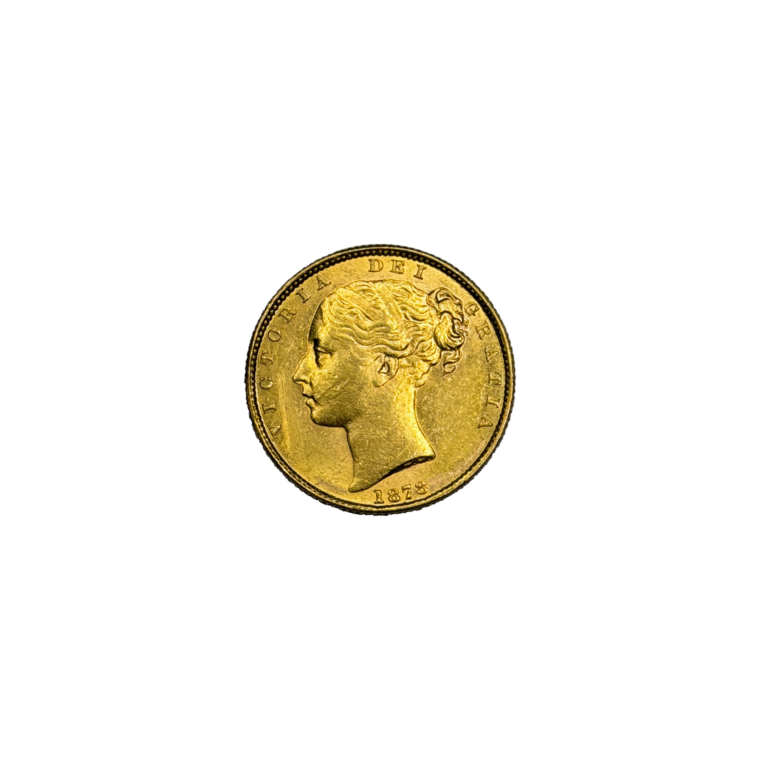
AU
1838-1887
.2354 troy ounce
Britain
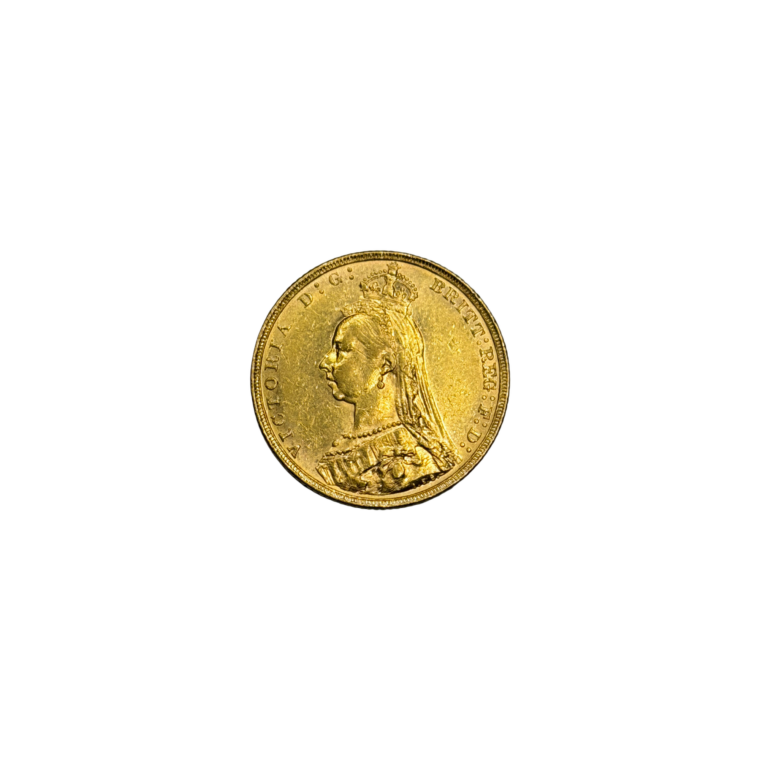
AU
1887-1893
.2354 troy ounce
Britain
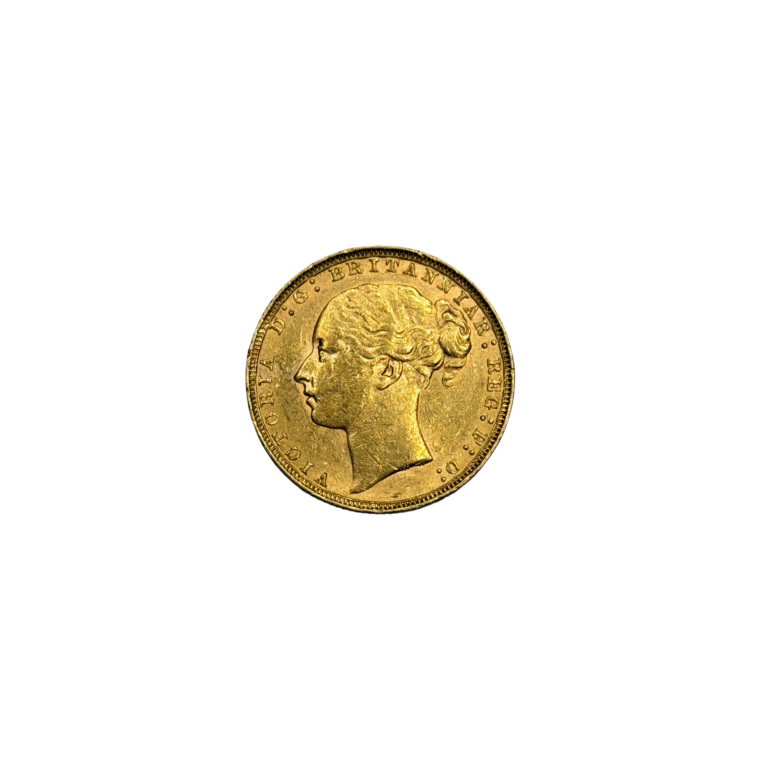
XF, AU
1871-1885
.2354 troy ounce
Britain


