

You must have an order with a minimum of $1,000.00 to place your order, your current order total is $0.00.
The chart below makes an argument that description alone cannot improve upon: in the span of roughly eighteen months during the 2008–09 financial crisis, the per ounce acquisition cost on certified MS63 $20 Saint-Gaudens Double Eagles expanded from a modest baseline to 99% above the gold spot price. An investor who established a position at the pre-crisis baseline owned, at the peak, a coin valued at nearly twice its underlying gold content. The gold had risen; the premium had compounded that gain. That is the certified pre-1933 gold coin thesis in its simplest form.
The MS63 certification from PCGS or NGC does something specific that raw, ungraded coins cannot replicate: it places a coin inside the institutional market — the auction platforms, dealer networks, and collector exchanges — where a genuinely finite certified population and a broad base of institutional buyers compete for the same coins. That competition, which operates almost invisibly during calm periods, becomes visible with a force that the premium chart records accurately when demand conditions shift.
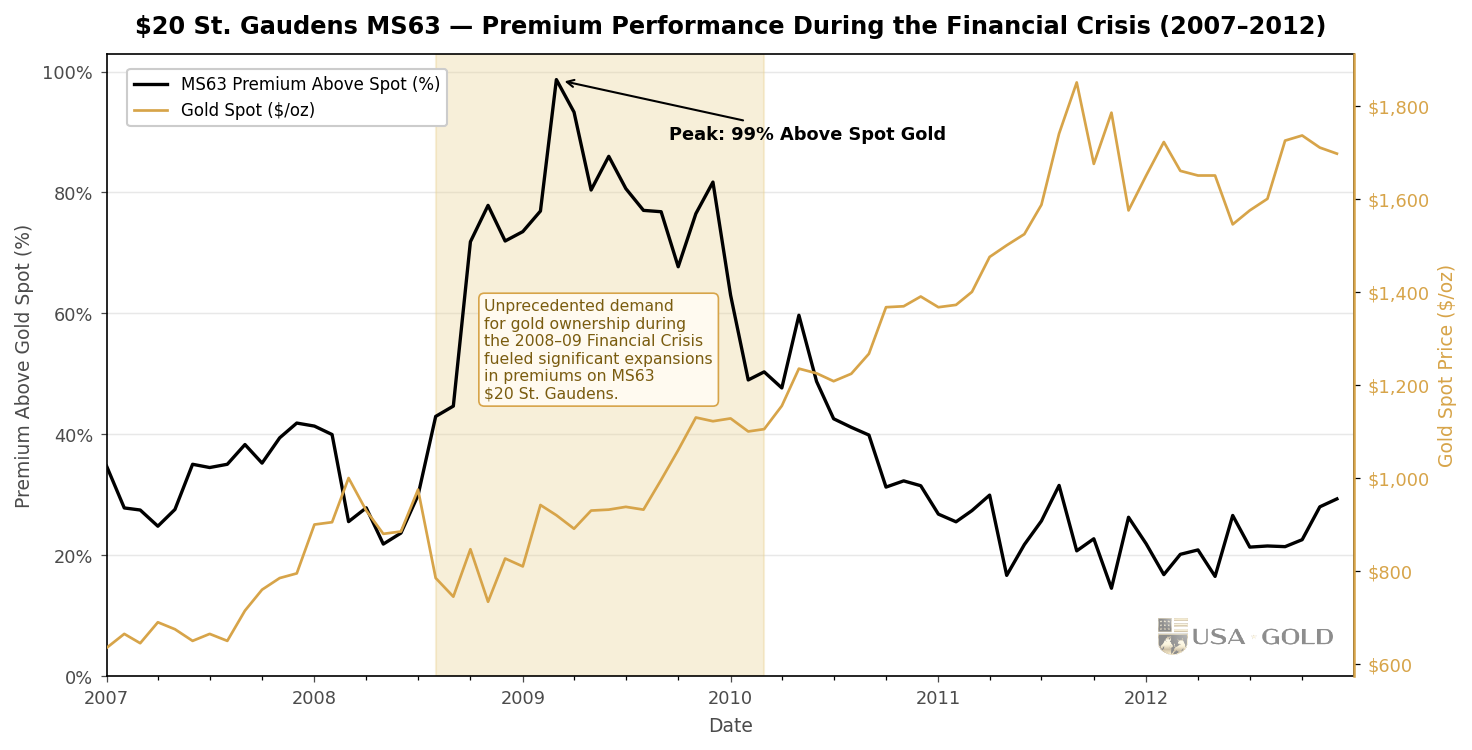
The crisis chart for the MS63 Saint-Gaudens shows a coin whose per ounce acquisition costs tracked modest baseline levels through 2007 and into early 2008, then expanded sharply as institutional and retail buyers moved simultaneously into certified physical gold. The peak at 99% above spot reflects not a speculative episode but a genuine supply constraint: the certified population of MS63 Saint-Gaudens at any given moment is finite and, unlike paper instruments, cannot be created on demand. The chart of a market responding to that constraint is what it shows.
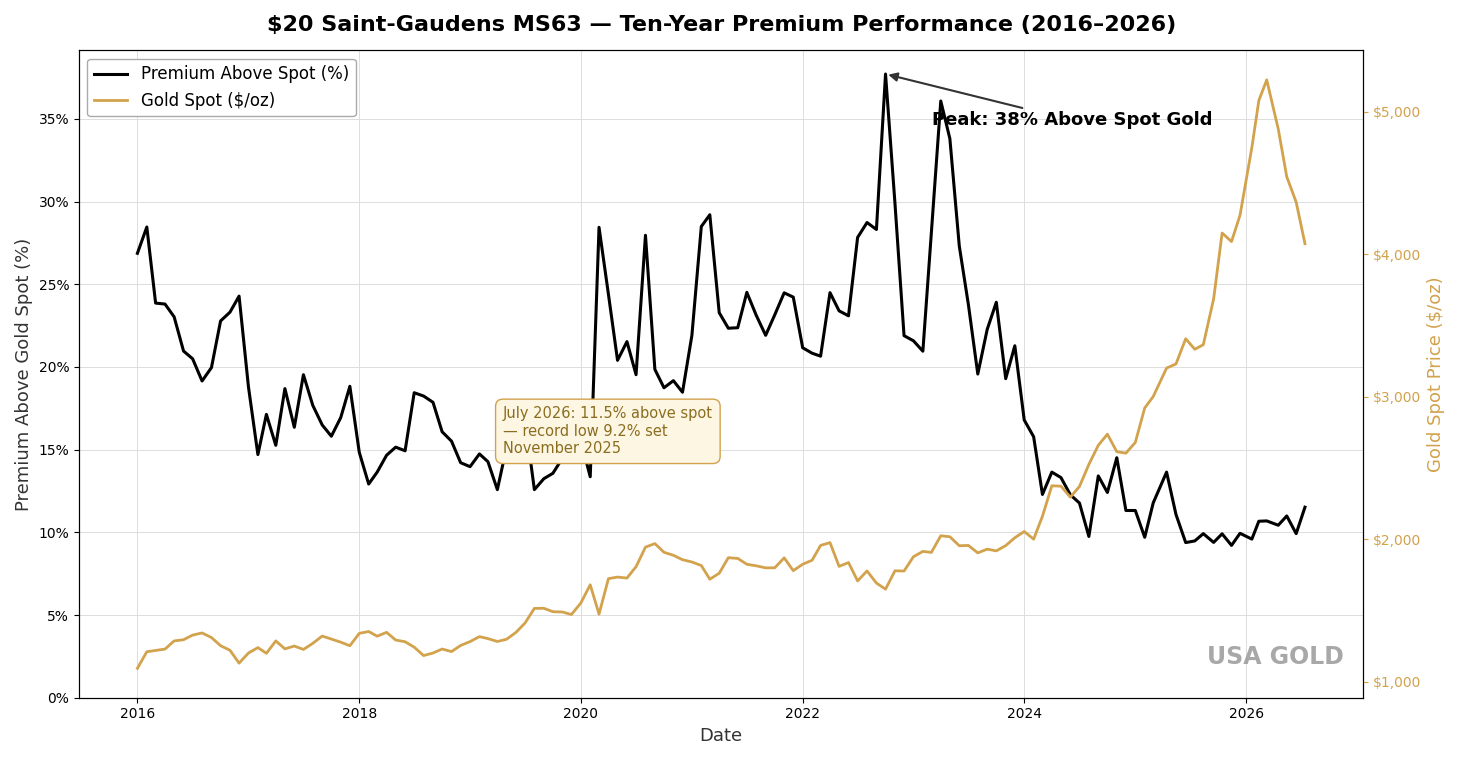
The 2020–23 period produced a second expansion episode: per ounce acquisition costs on the MS63 Saint-Gaudens reached 38% above spot as the Federal Reserve’s response to the pandemic — the most aggressive monetary expansion in the institution’s history — pushed investors into physical gold and, consequently, into certified historical American gold coins. The current level of 11.5% above spot (July 2026) represents the contraction that followed that expansion. It sits below the 2018–2019 baseline, which was itself a period of unremarkable demand and modest acquisition premiums.
For investors who acknowledge that the conditions driving premium expansion — financial stress, monetary instability, rapid shifts in institutional confidence — are recurring rather than anomalous, the current entry point warrants attention. Eleven percent above spot to own a full ounce of gold in the most celebrated American gold coin, certified and graded by the leading third-party authentication service in the world, is a per ounce acquisition cost that the premium history does not suggest is the upper bound.
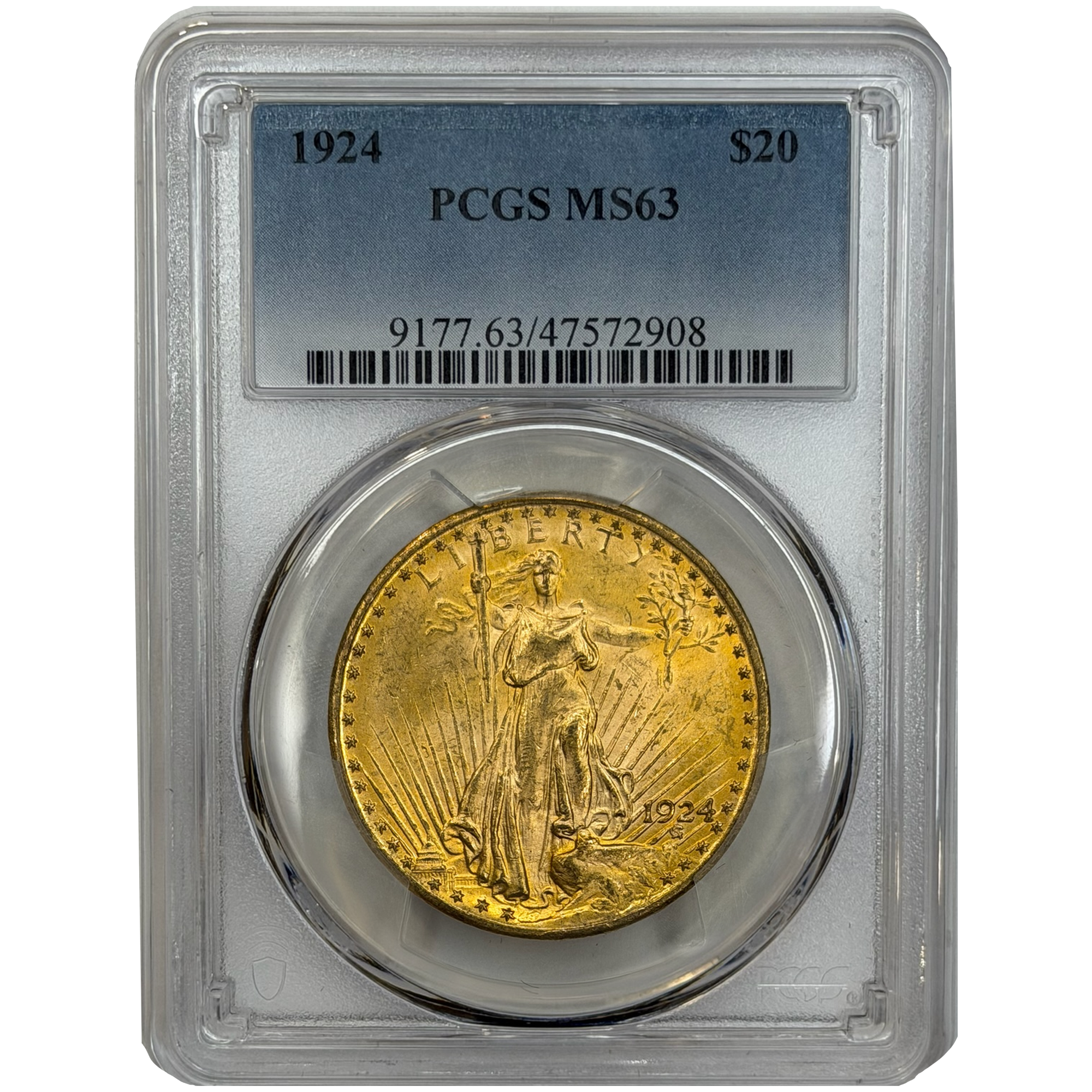
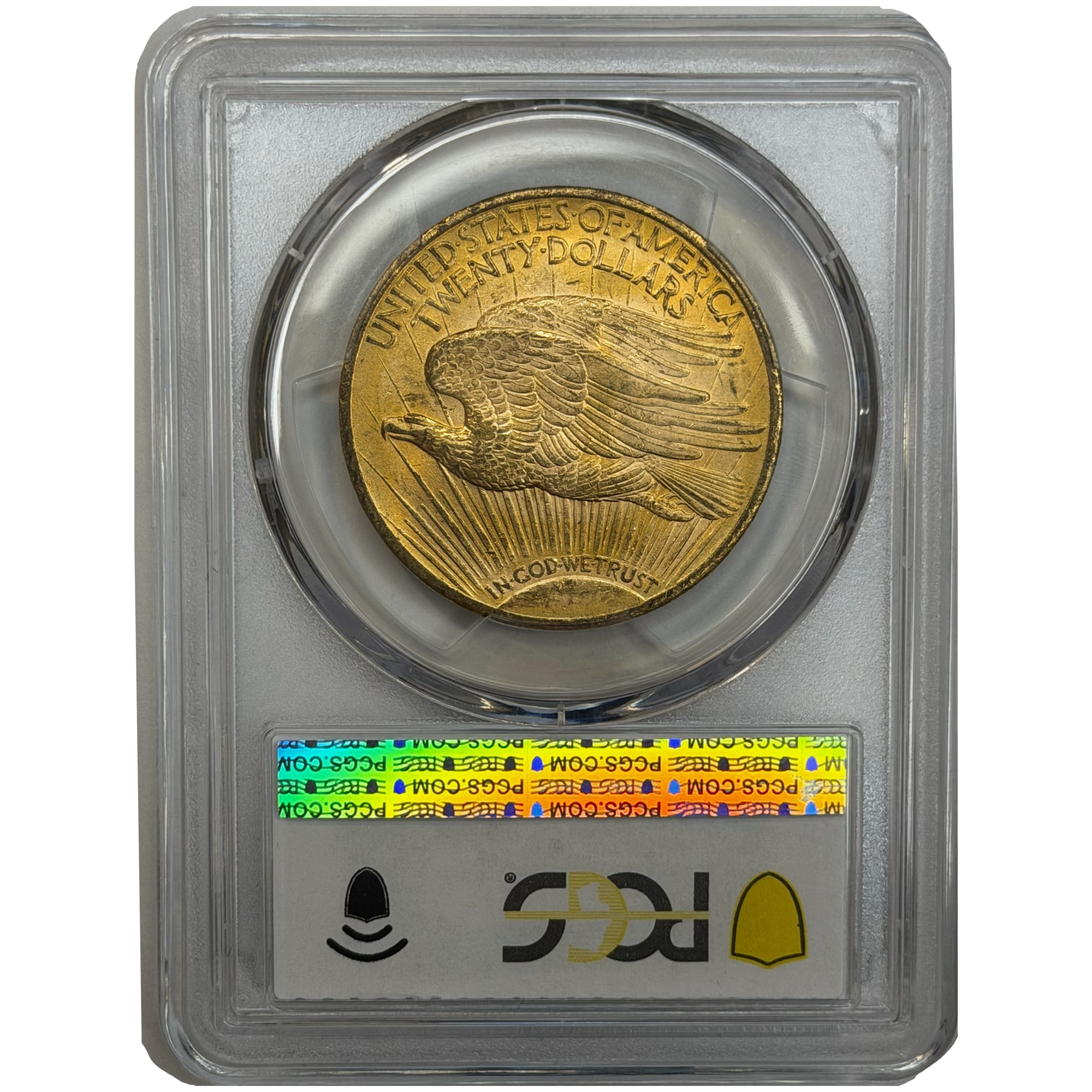
The $20 Saint-Gaudens Gold Double Eagle was minted from 1907 to 1933, designed by sculptor Augustus Saint-Gaudens at the personal commission of President Theodore Roosevelt. It is widely regarded as the most beautiful coin the United States ever produced. The obverse presents Lady Liberty striding forward, torch and olive branch in hand, the U.S. Capitol visible behind her. The reverse shows a majestic eagle in flight above a radiating sun. At 34.1mm in diameter and 33.431 grams, each coin contains 0.9675 troy ounces of pure gold — interchangeable with any recognized full-ounce gold holding. Detailed design history, including the ultra-high-relief 1907 issues and the full production narrative, is available at our reference page: Investing in $20 St. Gaudens Gold Coins
Our reference article on investing in $20 Saint-Gaudens gold coins — linked above — discusses multiple portfolio approaches for the certified market, including the strategic acquisition of diverse dates and mint marks within the MS63 and higher grade range. At current per ounce acquisition costs, the MS63 market offers perhaps the most accessible entry point into institutional pre-1933 gold that has demonstrated meaningful premium expansion at times of elevated demand. For investors considering a meaningful position, the diversity of available dates — Philadelphia, San Francisco, and Denver issues spanning 1907–1933 — provides opportunities to build varied holdings without paying significant additional premiums over common dates.
The certified pre-1933 gold market adds a dimension to gold ownership that standard bullion does not provide: institutional demand. When financial or monetary conditions shift, two categories of buyer move simultaneously — those seeking gold for its metal content, and those seeking certified historical gold coins for their scarcity. The MS63 Saint-Gaudens sits at the intersection of both. Its premium history is a record of what that intersection looks like under pressure. The possession of coins like the $20 Saint-Gaudens MS63 in a portfolio can insulate against both the panics that arrive suddenly and the purchasing-power erosion that accumulates over decades — just as it has done for millennia.
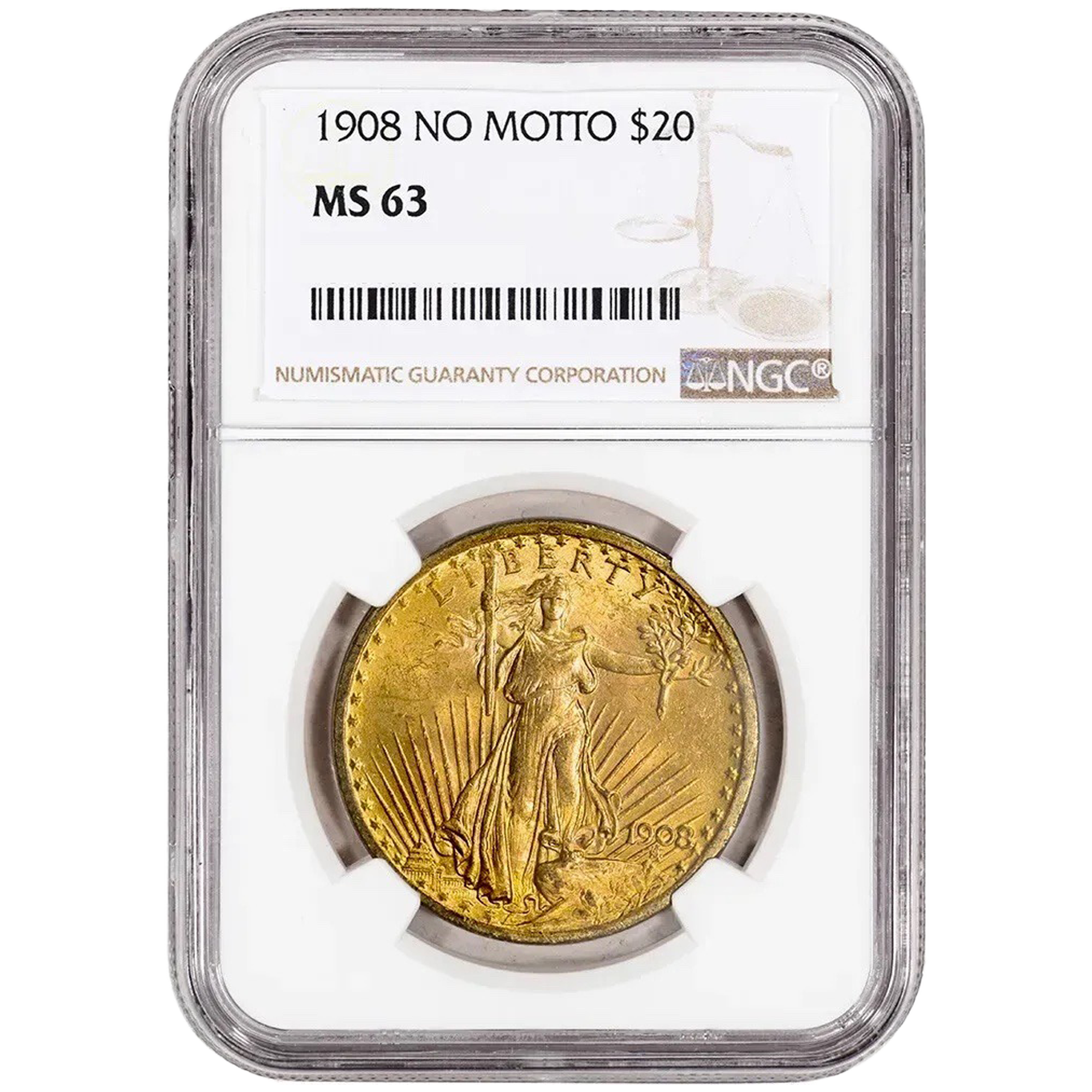
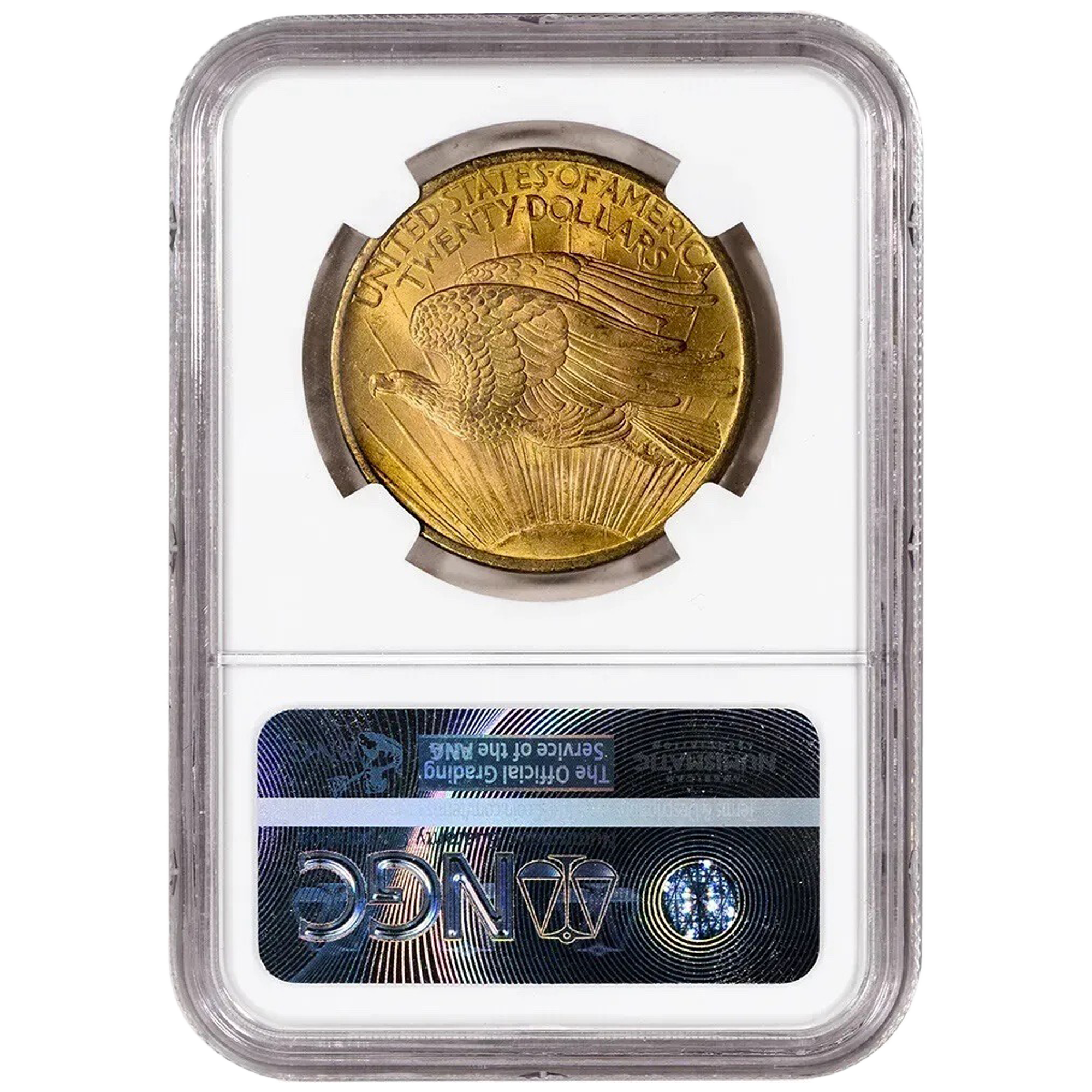
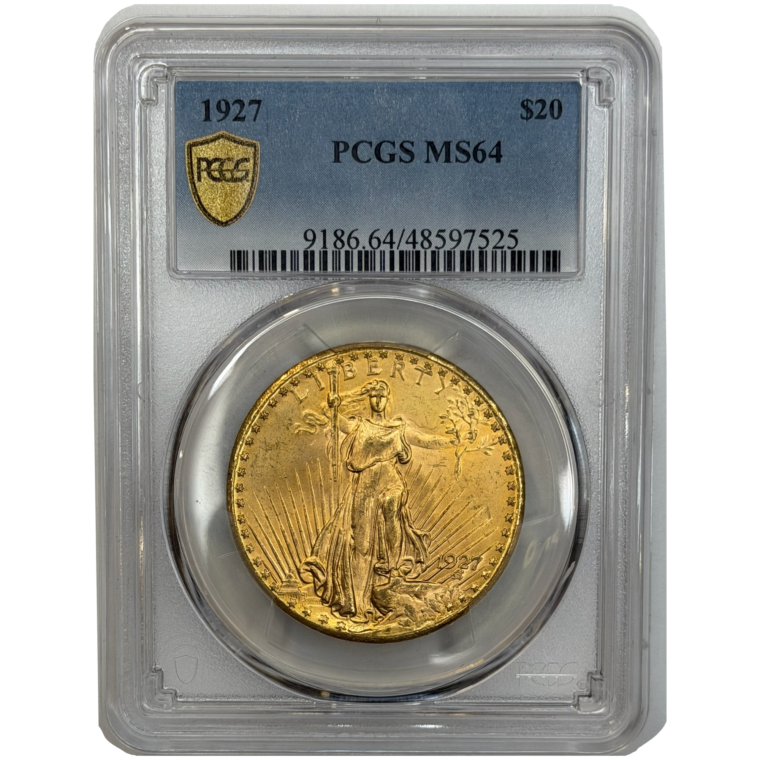
Certification: Every coin we ship at this grade is independently graded and encapsulated by PCGS or NGC, the market’s two leading certification services; a PCGS example is pictured. The coin you receive will match the MS63 grade shown, fully authenticated and attributed by the grading service.
Learn More:
MS63
1907 – 1932
.9675 troy ounce
United States
PCGS or NGC (PCGS pictured)
| Quantity | Wire | Card |
|---|---|---|
| 1–5 | $4,548.48 | $4,738.00 |
| 6–10 | $4,503.00 | $4,690.62 |
| 11+ | $4,457.51 | $4,643.24 |
Quantity tiers reflect the historic & fractional gold order discount (1% at $25,000+ · 2% at $50,000+ in qualifying coins). Any mix of qualifying historic coins counts toward the same order total.
Prices shown under Wire include a 4% cash discount. Card prices are the full list price. ACH bank transfer is available to established clients only. First-time orders can be paid by wire transfer or card.
Interested in gold but struggling to find the right firm?


MS62
1907 – 1932
.9675 troy ounce
United States
PCGS or NGC (PCGS pictured)

MS65
1907 – 1932
.9675 troy ounce
United States
PCGS or NGC (PCGS pictured)

AU, UNC
1907 – 1932
.9675 troy ounce
United States
MS64
1907 – 1932
.9675 troy ounce
United States
PCGS or NGC (PCGS pictured)


