

You must have an order with a minimum of $1,000.00 to place your order, your current order total is $0.00.


The $20 Liberty Gold Double Eagle occupies a singular position in American numismatic history. Minted from 1849 to 1907 across five mint facilities — Philadelphia, San Francisco, Carson City, New Orleans, and Denver — it was born directly of the California Gold Rush. The Coinage Act of 1849 authorized it because so much newly discovered gold was flooding into the U.S. Mint that a denomination large enough to absorb it had become a practical necessity. The result was the most ambitious gold coin the young republic had ever produced: nearly a full troy ounce of fine gold, bearing James B. Longacre’s portrait of Liberty in a pearl-bordered coronet, and serving as the backbone of American commercial gold transactions for nearly six decades.
The obverse bears Longacre’s portrait of Liberty wearing a pearl-bordered coronet inscribed LIBERTY, surrounded by thirteen stars representing the original colonies. The reverse presents a heraldic eagle with shield, clutching an olive branch and arrows — peace and preparedness held in equal measure. The coin was produced in three distinct types across its lifespan: the Type I (1849–1866, no motto), the Type II (1866–1876, with “Twenty D.” on the reverse), and the Type III (1877–1907, “Twenty Dollars” spelled in full), each reflecting subtle design refinements introduced during the coin’s long production run.
At 34mm in diameter and 33.436 grams total weight, each coin is struck from .900 fine gold and contains 0.9675 troy ounces of actual gold content — making it interchangeable with any recognized full-ounce gold holding, including the American Gold Eagle, the American Buffalo, or the Canadian Maple Leaf. An investor who holds a $20 Liberty holds effectively the same gold content as any modern one-ounce bullion coin, wrapped in 175 years of American history.
James B. Longacre was the Chief Engraver of the United States Mint when he received the commission to design the new double eagle. His model for Liberty was drawn from classical Greco-Roman influence — the pearl-bordered coronet lending her portrait a dignity appropriate to the denomination. The coin that resulted was not purely aesthetic; it was a practical instrument of commerce. In a pre-Federal Reserve era, the $20 Liberty moved the equivalent of a skilled tradesman’s weekly wage across a single coin. It settled accounts, funded payrolls, and crossed the Atlantic in trade settlements between American merchants and their European counterparts.
The series spanned some of the most consequential decades in American history. Type I Liberties were struck through the Civil War — a period when gold itself was hoarded as Congress issued paper currency that traded at a discount to specie. Type II pieces circulated through Reconstruction and westward expansion. Type III coins, the most common of the three types, were produced into the early twentieth century and remain the most frequently encountered in AU/UNC condition today.
The series ended in 1907, when Augustus Saint-Gaudens designed its successor — the $20 Saint-Gaudens, widely regarded as the most beautiful American coin ever struck. But the Liberty’s 58-year run left behind a substantial surviving population of AU/UNC examples precisely because a portion of the original mintage was set aside as savings rather than spent into commerce. That same habit of preservation is why AU/UNC examples remain accessible at near-bullion per ounce acquisition costs today.
These coins are scarce in the proper sense of the word: the surviving AU/UNC population is far smaller than the original mintage would suggest after more than a century of attrition, circulation, and melt. But they are not rare in the numismatic sense — they do not command the significant multiples over gold spot that collector-grade rarities demand. They trade on their gold content first and their history second. That is precisely what creates the investment opportunity — and at current per ounce acquisition costs of 8.8% above spot as of July 2026, it is as accessible as it has been at any point in recent memory. The discerning gold investor can establish a near-full-ounce position in one of the most historically significant American coins ever produced at effectively near-bullion pricing.
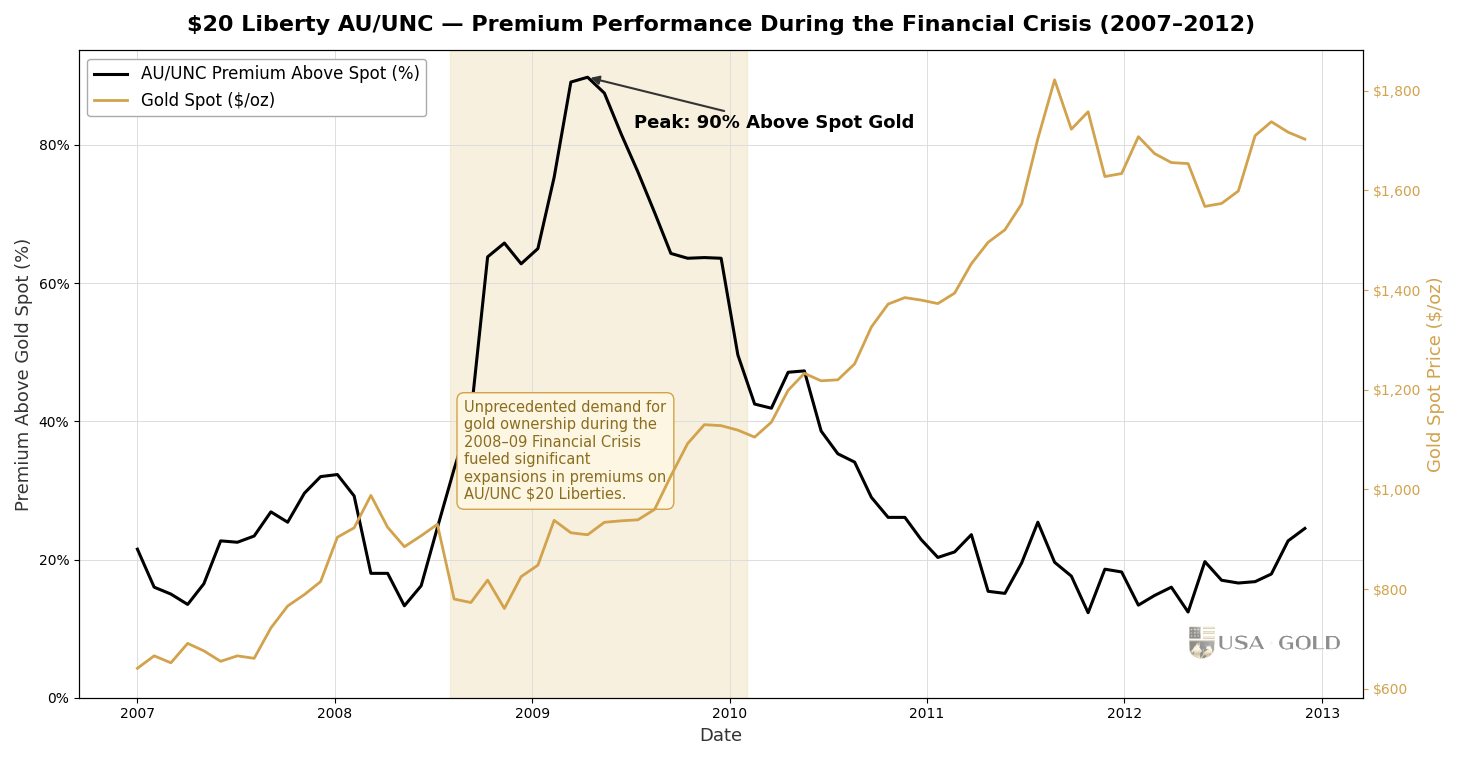
The chart above tracks the premium performance of the $20 Liberty AU/UNC against the gold spot price through the 2008–09 financial crisis. What it records is not conjecture; it is the documented behavior of the market under duress.
In the years before the crisis, per ounce acquisition costs on the $20 Liberty AU/UNC ran at a modest baseline — broadly consistent with what a buyer would expect to pay for a coin with significant gold content and historical relevance, but no particular urgency. Then the credit markets seized. Investors moved into physical gold with a speed and intensity that overwhelmed available supply. Premiums on the $20 Liberty AU/UNC expanded to a peak of 90% above the gold spot price — not because the coin had changed, but because the demand for it had.
The lesson the chart teaches is not that premiums always expand to 90%. It is that per ounce acquisition costs on historically significant American gold coins are not fixed. They respond to conditions. When conditions are benign and demand is measured, acquisition costs reflect primarily the coin’s gold content. When conditions shift, they can shift dramatically — and quickly.
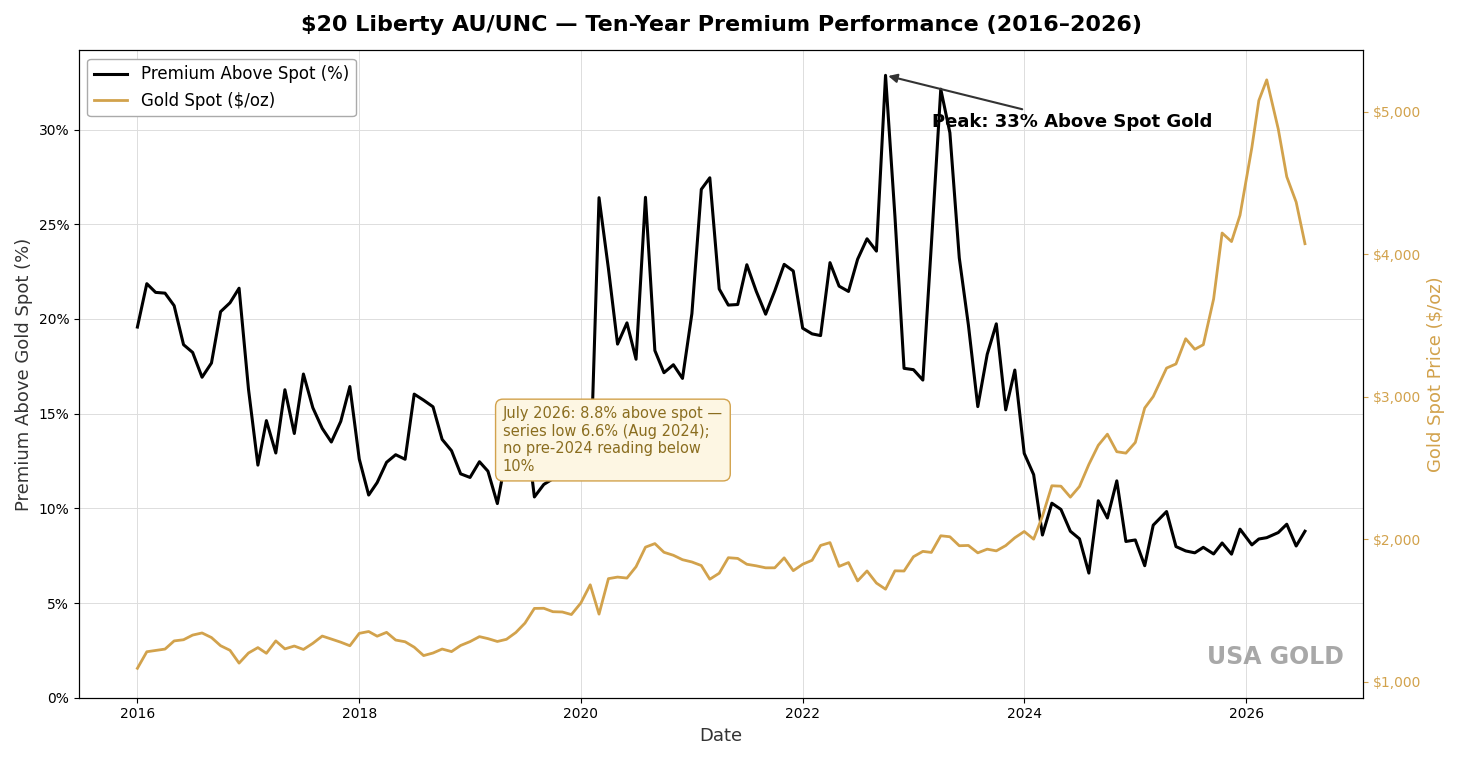
The ten-year chart tells the more recent story. The 2020–23 period produced a second premium expansion episode — less severe than 2008, but significant: per ounce acquisition costs on the $20 Liberty AU/UNC reached 33% above spot, driven by a combination of pandemic-era economic uncertainty and the Federal Reserve’s unprecedented monetary expansion. Investors once again moved into physical gold, and premiums on historical American gold coins followed.
What the right side of the chart shows is the current environment: per ounce acquisition costs have contracted to 8.8% above spot as of July 2026. Not only is this well below both previous expansion peaks — it sits below the 2016–2019 baseline, a period when the market was unremarkable and conditions were calm. On a per ounce acquisition basis, the $20 Liberty AU/UNC is as inexpensive relative to its underlying gold value as it has been at any point in recent memory.
For investors who believe that the conditions historically associated with premium expansion — financial panics, monetary instability, and rapid shifts in institutional confidence — are enduring features of the economic landscape rather than isolated episodes, the current pricing represents a considered entry point. At 8.8% above spot, an investor is paying a historically low carrying cost to own a full ounce of gold in a coin that has, on two occasions in the last fifteen years, traded at multiples of that level.
The $20 Liberty Gold Double Eagle has outlasted every currency, every institution, and every financial regime that existed when it was first struck in 1849. The paper currencies of that era are museum pieces. The coin is not.
Financial history teaches that assets rooted in tangible, extractable value — gold chief among them — can insulate a portfolio against the panics, manias, and asset collapses that recur with uncomfortable regularity. The mechanism here is distinct from a second threat: the steady erosion of purchasing power through monetary expansion and the monetization of government debt. These are two separate phenomena. Panics and manias follow a recognizable arc — rapid inflation of an asset class, a euphoric peak, a collapse. Currency debasement moves more slowly, through the accumulation of policy decisions that collectively diminish what a unit of currency buys over time.
The $20 Liberty has survived both — across presidential administrations, monetary regimes, two world wars, and the complete reorganization of the global financial order. The possession of gold coins like the $20 Liberty in a well-constructed portfolio acknowledges both threats for what they are: not hypothetical conditions to be hedged against someday, but recurring features of the financial landscape — just as they have been for millennia.
Learn More:
Pre-1933 US Gold Coins Investment Guide: $10 & $20 Liberty Complete Analysis
AU, UNC
1850-1907
.9675 troy ounce
United States
| Quantity | Wire | Card |
|---|---|---|
| 1–5 | $4,495.24 | $4,682.54 |
| 6–10 | $4,450.29 | $4,635.71 |
| 11+ | $4,405.34 | $4,588.89 |
Quantity tiers reflect the historic & fractional gold order discount (1% at $25,000+ · 2% at $50,000+ in qualifying coins). Any mix of qualifying historic coins counts toward the same order total.
Prices shown under Wire include a 4% cash discount. Card prices are the full list price. ACH bank transfer is available to established clients only. First-time orders can be paid by wire transfer or card.
Interested in gold but struggling to find the right firm?

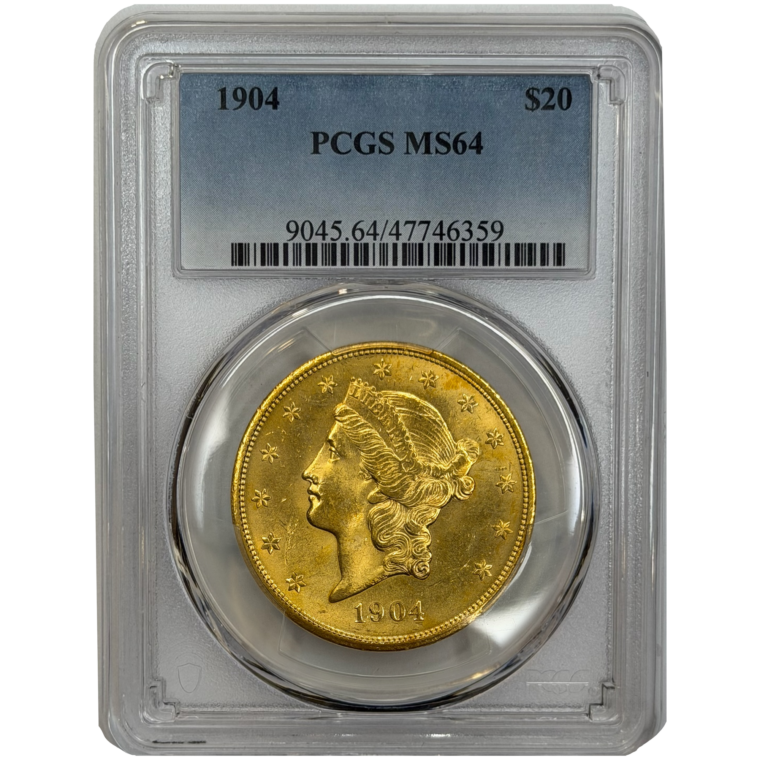
MS64
1850-1907
.9675 troy ounce
United States
PCGS or NGC (PCGS pictured)
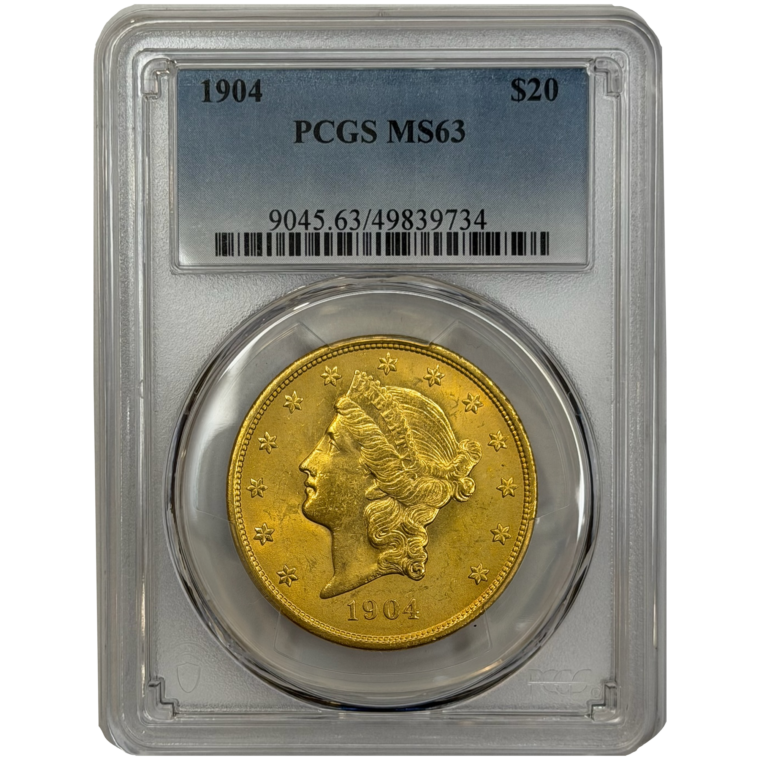
MS63
1850-1907
.9675 troy ounce
United States
PCGS or NGC (PCGS pictured)


